
BOTSWANA 8 Days
This itinerary connects Zimbabwe’s thunderous Victoria Falls to the remote wilderness of Botswana.
About the size of France and economically robust, Botswana is a landlocked sanctuary dedicated to preserving its most pristine game areas.
In the northwest region lies the Okavango Delta and Moremi, a breathtaking sanctuary of winding waterways and lush floodplains. Within the Moremi Game Reserve, sapphire lagoons and emerald islands shelter the “Big Five“
and the rare African wild dog, creating a shimmering water-world teeming with life and striking scenery.
Chobe National Park, known as “The Elephant Highway,” hosts the world’s largest elephant concentrations.
Chobe offers a unique perspective on the wild. Swap the dusty trail for a riverboat to glide past massive herds and pods of hippos, experiencing Africa’s best—from the Kalahari’s golden grass to the river’s edge.
<The Photo Gallery can be found at the bottom of this page>
🇧🇼 Essential Tips:
Travelwildnow.com strongly advises using a licensed tour operator for your safari. They make a custom plan
and stay with you the whole trip.Look for trusted companies in well-known travel guides like Lonely Planet and Bradt Travel Guide.
-
Micato Safaris: Renowned for their personalized service and deep knowledge of African wildlife, Micato Safaris offers both luxury and classic safari experiences in East Africa.
Wilderness Safaris: Specializing in eco-friendly and sustainable safari experiences, Wilderness Safaris operates in several African countries and focuses on wildlife conservation and community development.
Expert Africa: Known for their authentic safari experiences and intimate camps, Expert Africa offers guided safaris emphasizing wildlife encounters and cultural immersion.
AndBeyond: Offering luxury safaris in several African countries, AndBeyond is recognized for its conservation efforts and exclusive safari lodges located in prime wildlife areas.
Asilia Africa: A leader in responsible tourism, Asilia Africa operates safari camps and lodges in East Africa, providing authentic safari experiences while supporting local communities and wildlife conservation.
Singita: With luxurious lodges and exclusive safari experiences, Singita operates in South Africa, Zimbabwe, and Tanzania, focusing on wildlife conservation and sustainable tourism practices.
Great Plains Conservation: Known for their conservation-focused safaris, Great Plains Conservation offers luxury safari experiences in Botswana, Kenya, and Zimbabwe, with a commitment to wildlife protection and community development.
Ker & Downey Africa: Specializing in customized luxury safaris, Ker & Downey Africa offers personalized itineraries across various African destinations, ensuring high-quality service and unique wildlife encounters.
These safari operators are well respected for their conservation work, sustainable practices, and excellent safaris.
⚠️ Research and read reviews to pick one that matches your preferences.
-
When you plan a large-scale trip like a safari, it’s generally part of a tour or vacation package that requires prepayments and deposits. This is why it’s important to consider trip cancellation insurance.
Trip cancellation is the most common travel insurance claim, followed by trip delay and emergency medical expenses due to sickness.
Visas: US and Canadian citizens do not need a visa for Botswana, but do require a visa for Zimbabwe (available online or upon arrival). Passports must be valid for 6+ months beyond your travel dates.
Currency: The US dollar is accepted in both Botswana and Zimbabwe. It is recommended to bring US dollars on your trip. ⚠️ Note: ATMs are not reliable in Zimbabwe.
Vendors and banks in both countries strictly reject USD bills printed before 2009, or any bills with
small tears or heavy wear.
Health: Check for vaccine and malaria recommendations well in advance. Drink bottled water.
Travel adaptors used in Botswana and Zimbabwe: Type D, Type G and less common Type M.
Keep your camera in a dust-free bag. Driving on unpaved roads brings in dust that can harm your camera.
⚠️ The One Booking Mistake That Destroys African Safari Plans
Missing a connection doesn't just disrupt your trip—it can ruin the costly safari tour you've planned for months. Give yourself 3+ hours if you are connecting between two commercial flights on the same day.
⚠️ Why a tight connection becomes a logistical and financial nightmare for your safari:
You Pay for an Empty Luxury Lodge: Safari lodges are usually all-inclusive & can cost hundreds per night.
The "Bush Taxi" Won't Wait: Bush planes fly only in daylight because remote dirt airstrips have no lights. If your international flight arrives late, the bush plane will leave without you.
Stranded Without a Guide: Safari operators schedule pickups precisely. If you miss your arrival window, the guide can’t wait all day—they must go back to the lodge for other guests. Rescheduling a remote pickup is very hard because cell service is unreliable.
The Domino Effect on Activities: Safaris center on fixed morning and evening game drives. Missing your connection often costs 24–48 hours, ruining the wildlife sightings you came for.
The Reality: A missed connection can force your safari operator to redo your itinerary, often costing thousands in last‑minute charter flights and lost bookings.
ℹ️ What does a typical safari day look like?
05.30 am: wake-up call by a soft knock and animal sounds.
06.30 am: after fresh coffee or hot tea and a morning snack, start the morning safari activity (this is typically a game drive or boat trip).
09.30 am: extensive breakfast.
10.00 am - 2.30 pm: time to relax and have lunch.
02.30 pm: second game activity (either a drive, mokoro trip, or motorized boat trip).
07.00 pm: back in the lodge for dinner, leisure time.
08:30 pm: you may have the option of an evening game drive.
10.00 pm: bedtime.
-
Answer: Animal attacks are definitely on people’s mind when travelling to safari areas for the first time or at anytime.
On safari you will, most likely, come into very close proximity to potentially very powerful and dangerous wild creatures.
Serious injury caused by large animals when out on safari is relatively RARE, but it does happen. The chances of being involved in such an incident are around 1 in 80,000, which is very low.
The most dangerous large animals are elephants and hippos.
The highest levels of risk are usually encountered when out on a walking safari.
-
In general, Botswana & other African countries prohibit drones in national parks.
Each country has rules and regulations regarding drone usage in game reserves and parks. You need to request permission from the Civil Aviation Authority Of Botswana (CAAB) in the form of writing, at least one week prior to your departure.
Please note that some international airlines have rules and regulations regarding LiPo batteries used in drones, so check with them prior to your departure.
-
Some essential considerations:
#1. You’ll need a passport with at least six (6) months’ validity from your departure date, as well as two open pages for your visas.
#2. You may need shots. Most health professionals recommend immunizations for typhoid, hepatitis, and antimalarial medication.
#3. Buy some Quick-dry safari shirts and pants, and a wide brimmed hat to protect yourself from the sun and dust.
#4. Other considerations include binoculars, travel insurance and international phone plans.
DAY 1
Arrive at Victoria Falls Airport, Zimbabwe, and transfer to your hotel.
A tour guide will meet you at arrivals and assist with the next steps. Tour operators handle all your accommodation needs.
Most hotels in Victoria Falls are a short walk from the majestic Falls.
The Victoria Falls Hotel and Ilala Lodge stand as the closest options.
[See other hotel options in the area]Activity: If you have time, walk from your hotel to Victoria Falls for a quick view. It is a 10-minute walk from town. You will find an easily accessible
trail that runs along the Falls, no guide needed.The trail is a paved 3 km (2-mile) path through a dense, misty rainforest.
Overnight: Victoria Falls.

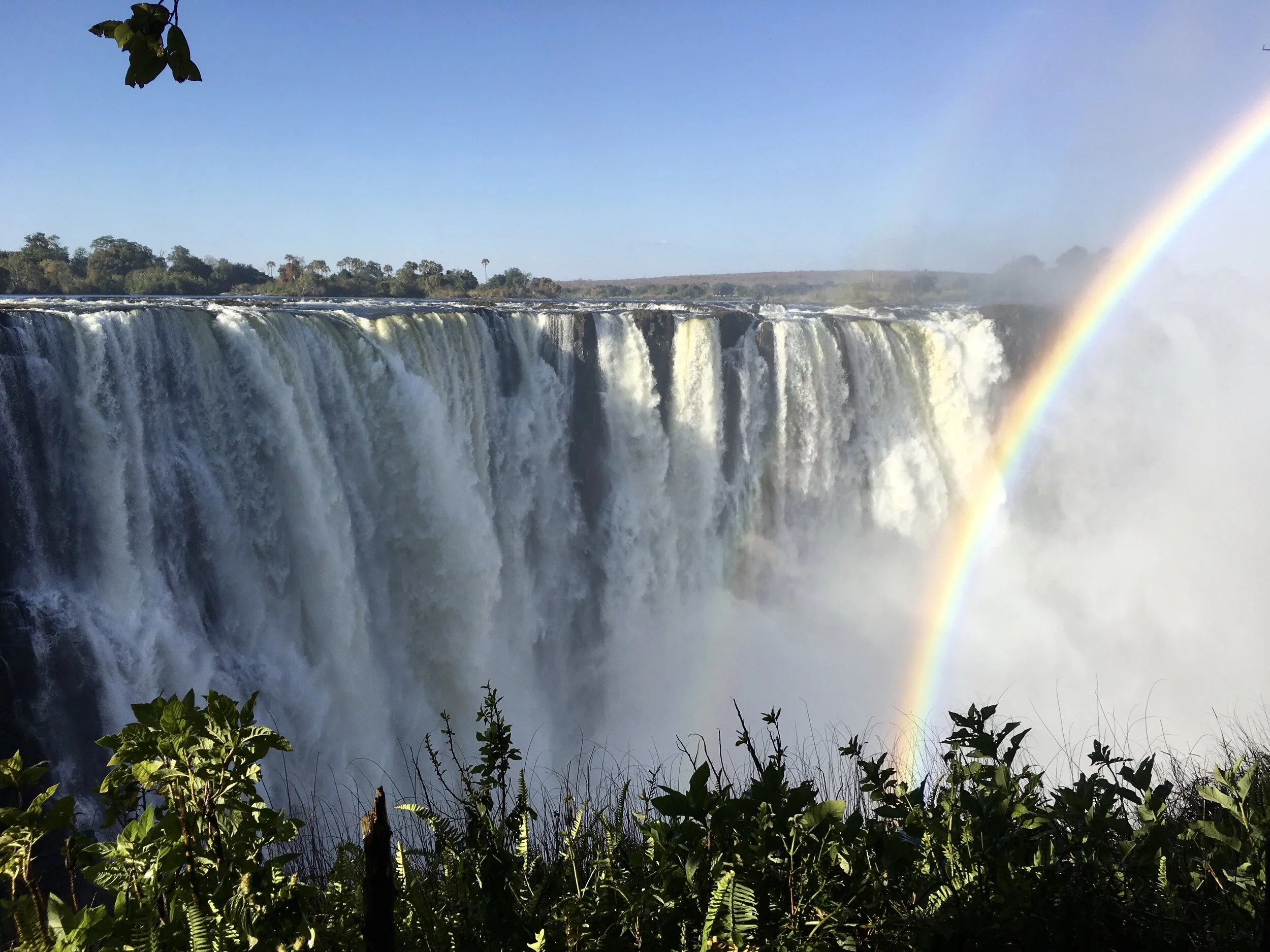
The Falls sit on the border of Zambia and Zimbabwe.
The Zimbabwe side offers the best classic views of the actual falls.
[Enlarge Image]
-
The 👀 Viewpoints on the trail:
Devil's Cataract & Livingstone's Statue – Dr. David Livingstone is reputed to be the first European to see the Victoria Falls.
2. The “Chain Walk” – this leads down into the gorge, where one gets an excellent view of Devil’s Cataract and Cataract Island.
3. to 7. Devil's Cataract & Main Falls – you will find many types of bird life as well as flora and fauna.
6. Viewpoint 6 – best spot for views of Devil's Cataract.
7. Viewpoint 7 – provides the best views of the Main Falls.
8. Main Falls – when the river is in flood, there is very little to see but torrents of spray.
9. to 12. – Main Falls/Livingstone Island/Horseshoe Falls.
11. Viewpoint 11 – provides wet views of Livingstone Island and Rainbow Falls.
14. Rainbow Falls – here is the highest point of the Falls.
15. Danger Point — this part of the trail leads along the cliff edge.
16. Boiling Pot – here one can look down into the turbulent waters.
Bridge Viewpoint – here you can view the Victoria Falls Bridge, linking Zimbabwe and Zambia.
DAY 2
After breakfast, walk the flat trail at Victoria Falls with its 16 viewpoints. Plan for 2- 3 hours to experience the mist.
Victoria Falls is located on the Zambezi River and is 1,708 meters wide and 108 meters high.
Sunlight changes the Falls' look throughout the day, creating many stunning views.
The Falls are one of the Seven Natural Wonders of the World. The others are the Great Barrier Reef, the Grand Canyon, Northern Lights (Aurora Borealis), Paricutin volcano, the Harbor of Rio de Janeiro, and Mount Everest.
Adventure activities in Victoria Falls include bungee jumping and white water rafting, which is considered the best in the world.
For those who are daring, you can also take a 15-minute Microlight flight that circles around Victoria Falls.
* * * * * * * * * * * * *

Around midday, your guide will transfer you across the border into Kasane, Botswana. Travel time: 2.5 hrs.
The town of Kasane serves as the entry point to Chobe National Park. The town is a bustling transit hub. It is a convenient base just minutes away from the park gates.
Botswana offers exceptional wildlife sightings thanks to unfenced ecosystems and low tourism to keep wildlife encounters private.
Visit Chobe National Park, renowned for its game viewing and boat cruises.
⭐️ Chobe boat cruises are a great way to see Botswana. You can witness large herds come to the river and islands to eat the sweet grass.
Chobe is divided into four (4) distinct regions, each offering a unique wilderness experience. These regions are described below:
Savute is famous for its fascinating channel and for its resident lion and spotted hyena populations.
Linyanti Wetlands - With its papyrus-lined waterways, Linyanti offers amazing birdwatching all year and is famous for large herds of elephants and wild dogs. It is one of Southern Africa's most beautiful and untouched wilderness areas, known for high-end luxury.
Nogatsaa-This area is remote and untouched, offering a genuine Botswana experience with hides overlooking grasslands, clay pans, and waterholes. It is hard to reach.
Map of the 4 regions.
Chobe Riverfront - this is the park’s easiest-to-reach area. It has the most wildlife and is the top safari spot for tour operators. The main entrance (Sedudu) is near Kasane. [map]
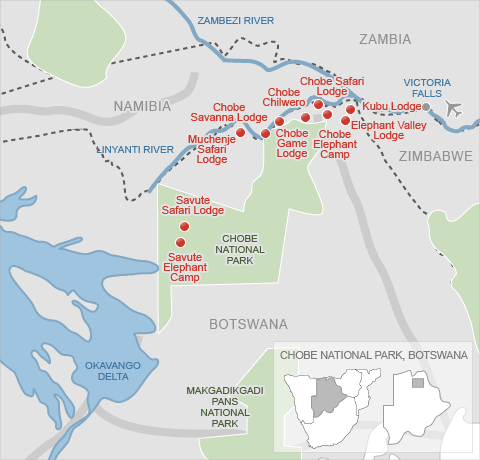
Chobe Park Lodge locations
Overnight: Chobe Park - Kasane region (3 nights)
Chobe Game Lodge is the only permanent lodge inside the park and offers an ultimate safari experience. Premium Cost: Staying inside the park is significantly more expensive due to park fees and the luxury nature of the remote properties.
Outside the Park: The main entrance to Chobe from Kasane is Sedudu Gate, very close to town. From most hotels in town, it’s a 5–10 minute drive.
[Read more] on the many accommodation choices outside of the park.
Houseboats are a great alternative.
—Chobe houseboats give guests a unique safari experience while staying comfortably on the floating lodge.
—Boats range from 5 to 14 suites. Guests can usually choose their daily itinerary or simply relax and enjoy the ride.
DAYS 3 and 4
Your journey continues with two (2) more days at Chobe National Park.
Chobe is famous for large groups of elephants, hippos, and Cape buffalo that gather by the Chobe River during the dry season. Lions, antelopes, and many other animals live nearby in the forests and lagoons.
Visitors can enjoy full-day safaris, unique night game drives, and relaxing boat cruises along the Chobe River, all arranged by their tour operator.
Night game drives are only available if staying at private concessions outside the park boundaries.
Visit Chobe in the dry season (late June–early October). Short grass and animals crowding the river make wildlife
easier to spot.
Overnight: Chobe-Kasane region.
-
Typically on a safari, you're likely to take a light aircraft flight.
This means that you will have to deal with a different luggage allowance than what you are accustomed to with regular airlines.
These small aircraft companies can be very strict on baggage limits, so it’s important to double-check your limit before you travel.
⚠️ If your itinerary states that soft bags are needed, this is because storage space on light aircraft flights is limited and therefore luggage should be soft (e.g. a duffel bag) so they can be squashed and manipulated into a small hold in the plane. Your bag should have no spines, frames or a rigid structure, although one flat side is usually allowed. Also, bags should have very small wheels or preferably, none at all.
Your main bag will be placed in the hold, and you will be holding your carry-on bags (i.e. hand baggage) on your lap for the duration of the flight as the aircraft do not have under-seat storage or overhead lockers for stowing bags.
⚠️ Note: Generally total weight allowance of 20kg (44 lbs) per person including hand luggage is allowed.
Watch this video explaining luggage limits.
Botswana light aircraft companies:
Mack Air - weight allowance of 20kg (44lbs) per person including hand luggage and must be in soft bags (i.e. duffel bag); note one flat/hard side is allowed but the majority of the bag needs to be soft. Maximum dimensions 27.5 inches (70cm) x 12 inches (30cm) x 13 inches (33cm).
Major Blue - weight allowance of 20kg (44lbs) per person including hand luggage, and must be in soft bags (i.e. duffel bag). Maximum dimensions 24 inches (60cm) x 12 inches (30cm) x 10 inches (25cm).
Moremi Air - weight allowance of 20kg (44lbs) per person, including hand luggage, and must be in soft bags (i.e. duffel bag). Maximum dimensions 24 inches (60cm) x 12 inches (30cm) x 10 inches (25cm).
Safari Air - weight allowance of 20kg (44lbs) per person, including hand luggage, and must be in soft bags (i.e. duffel bag). Maximum dimensions 24 inches (60cm) x 12 inches (30cm) x 10 inches (25cm).
Wilderness Air - weight allowance of 20kg (44lbs) per person, including hand luggage, and must be in soft bags (i.e. duffel bag); note one flat/hard side is allowed but the majority of the bag needs to be soft. Maximum dimensions 27.5 inches (70cm) x 12 inches (30cm) x 13 inches (33cm).
DAY 5
Your next stop is Moremi Game Reserve.
—Getting there: you board a small plane from Kasane to your specific camp's airstrip in the Moremi/Okavango region.
—Flight time ~ 45 minutes. Arrive by lunchtime.
The Moremi Reserve is the crown jewel of the Okavango Delta, and one of the world’s best wildlife reserves.
The Okavango Delta hosts many animals, giving them lots of space to live naturally. In the dry season, it’s ideal
for safaris and wildlife viewing. The delta is as large as Switzerland.Best time to visit: dry season, June to early October.
Throughout all the Parks, game drives are scheduled in the early morning, afternoon, and evening.
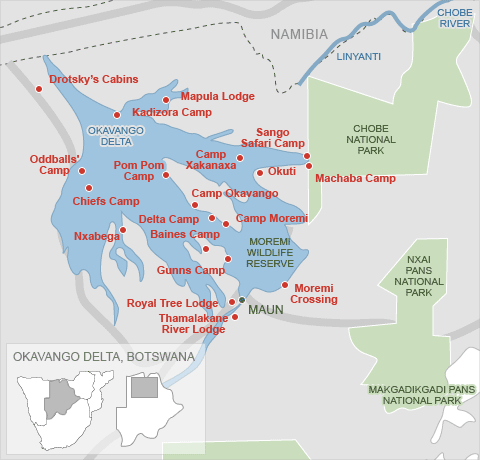
Moremi Reserve Camp locations
Overnight: Moremi Reserve camp. (3 nights)
Many visitors ask what the difference is between a tented camp and a lodge. —A lodge has concrete structures and walls made of stone or wood.
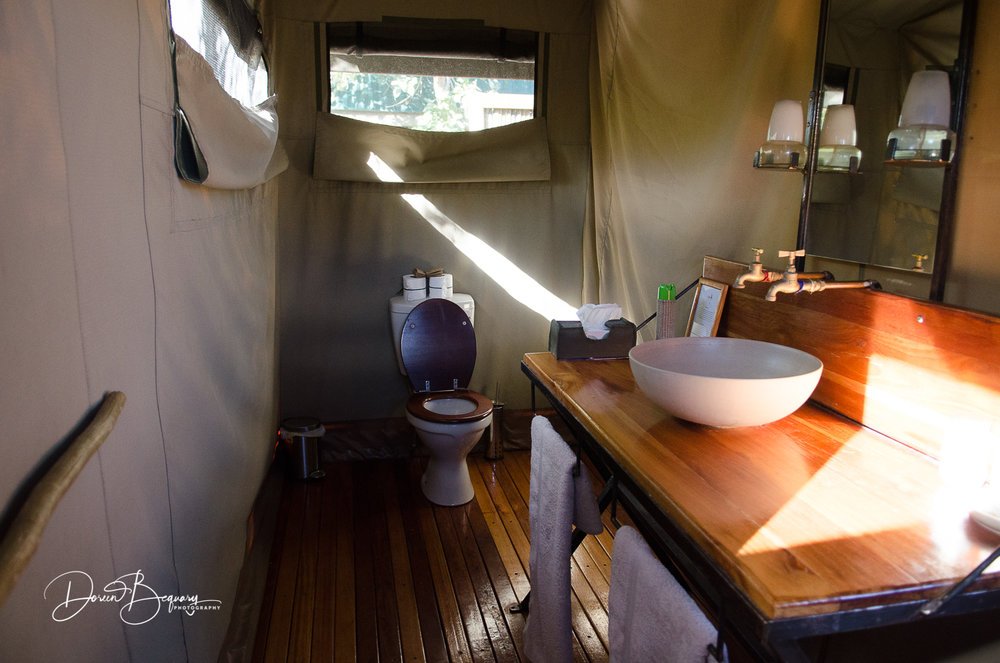
—A tented camp consists of large safari tents. Don’t think of the small tents you pitch in your backyard or on a campsite. These safari tents are spacious sleeping-living tents with en-suite bathrooms.
View—a typical 4-star tent.
Getting to Moremi Game Reserve
DAYS 6 and 7
Moremi Game Reserve—experience the untamed beauty and breathtaking game drives.
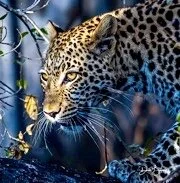
In the Moremi Reserve, visitors can enjoy great views of typical savanna wildlife, as well as birdwatching on the lagoons. There are also thickly wooded areas, which are home to leopards and the Cape Wild Dogs.
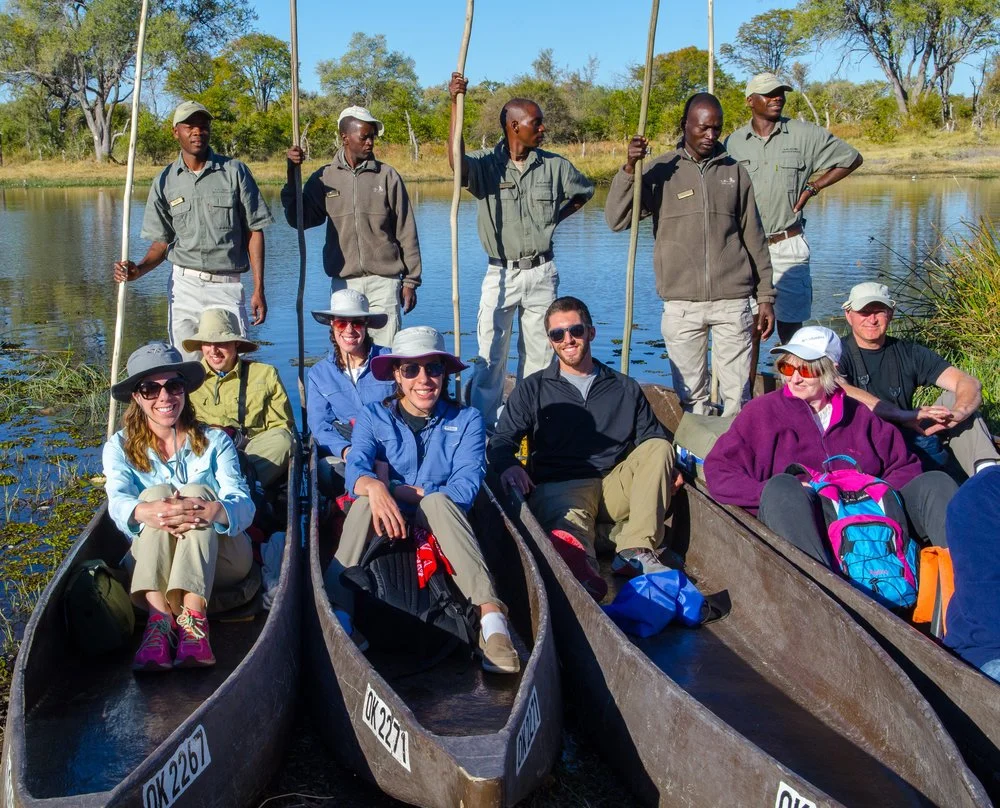
Embark on an unforgettable Mekoro (dugout canoes) tour down the Khwai River. Skilled guides will take you through the shallow delta, where you can see hippos, elephants, and crocodiles up close.
Overnight: Moremi Game Reserve camp.
DAY 8
End of the safari. Depart for Maun Airport for your return home.
Consider optional extensions to Namibia or Cape Town.
Driving time:
Moremi Camp —-> Maun Airport: 4.5 - 5 hours by bumpy road, or a 35-minute flight on a small aircraft.

Average cost:
(Excluding airfare)
USD $ per person:
Budget: $3800
Moderate: $4800
Luxury: $6100 +

🌤️ Climate Guide:
During the months of May through August, you will most likely experience good weather with pleasant average temperatures. Best time to visit.
Most rainfall (rainy season) is seen in January, February, and November.
The warmest month is October.
The coolest and driest months are July and August. An excellent time for a safari adventure.

Botswana Gallery
🎬 Video








References/sources: Wikipedia.org, chobenationalpark.com, greatzimbabweguide.comNo copyright infringement is intended on this website by travelwildnow.com