SWITZERLAND 9 Days
This trip covers Old Town Zurich, the charming city of Lucerne, scenic Interlaken, a visit to Jungfraujoch, the mountain village of Zermatt, and the picturesque capital city of Bern.
Switzerland is a country with mountains, blue lakes, and villages, along with the tall Alps. Its cities have old, medieval areas, like Lucerne’s wooden chapel bridge. The country is famous for ski resorts and hiking paths. Banking and finance are important, and Swiss watches and chocolate are well-known worldwide. Switzerland is about the same size as Estonia.
<Scroll down to the bottom of the page to view the Photo Gallery>
Essential Tips:
Renting a car is your best option for exploring the sights outside of Zurich and Lucerne.
Currency: the Swiss Franc (CHF). The Euro is not an official currency.
Travel Guides: Fodor’s Switzerland and Lonely Planet Switzerland.
A Switzerland Road Map always comes in handy.

➡️ How to get from Zurich Airport to Zurich Main Train Station and Zurich Old Town (city center)
The airport is 10 km (6 miles) from the Main Train Station (Zürich HB) at the northern end of Old Town (city center), making the transfer exceptionally quick.
Zurich Old Town encompasses the historic old town, surrounding many of the main tourist attractions, restaurants and bars.
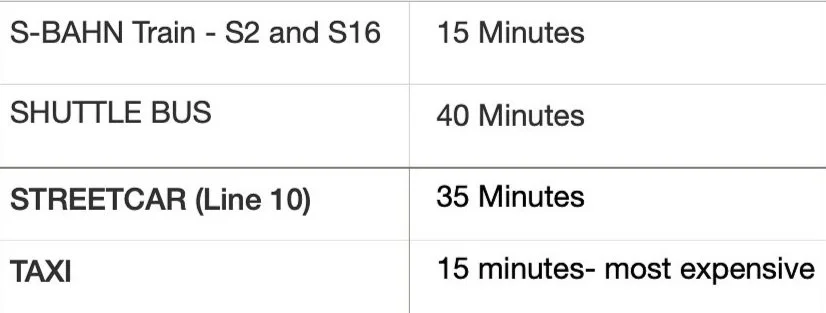
There are various ways of traveling from the airport to Zurich and the duration it takes.
The S-Bahn lines S2 and S16 run every 5-10 minutes from Zurich Airport to the Main Train Station (Zurich HB). It’s the fastest option.
[Train Route] [S-Bahn Network]
Uber or Taxi is the most convenient and most expensive transport, especially if you have luggage.
From the Main Train Station, you can connect to all points within Switzerland.

DAY 1
Arrive at Zurich airport or the train station. Transfer to your hotel.
Visit the Old Town district of Niederdorf with its winding car-free alleys, its symbolic Grossmünster church, and its many small boutiques, restaurants, bookshops, and craft studios.
Overnight: Zurich, we recommend staying in the Niederdorf district.
[Where to stay]
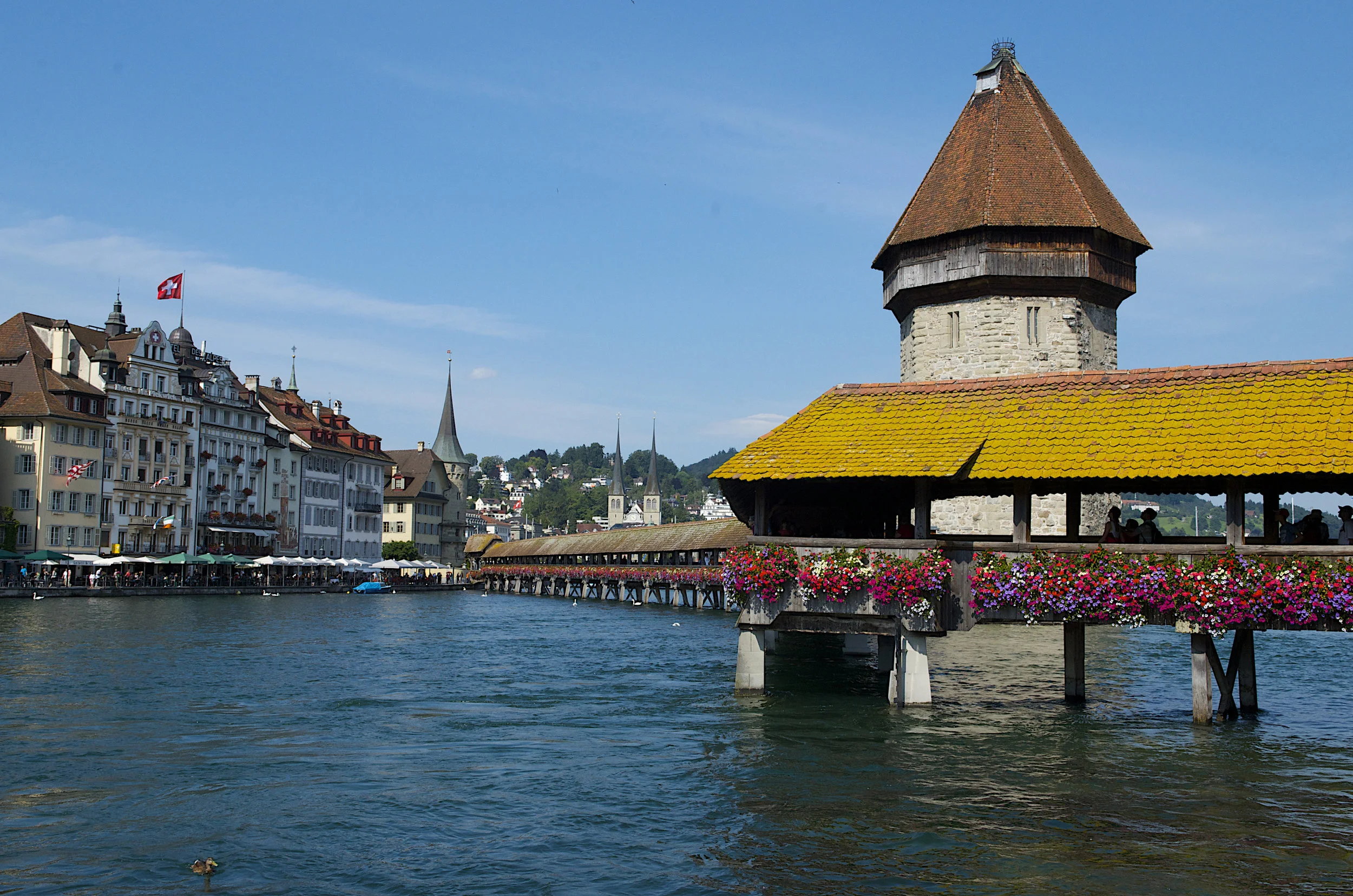
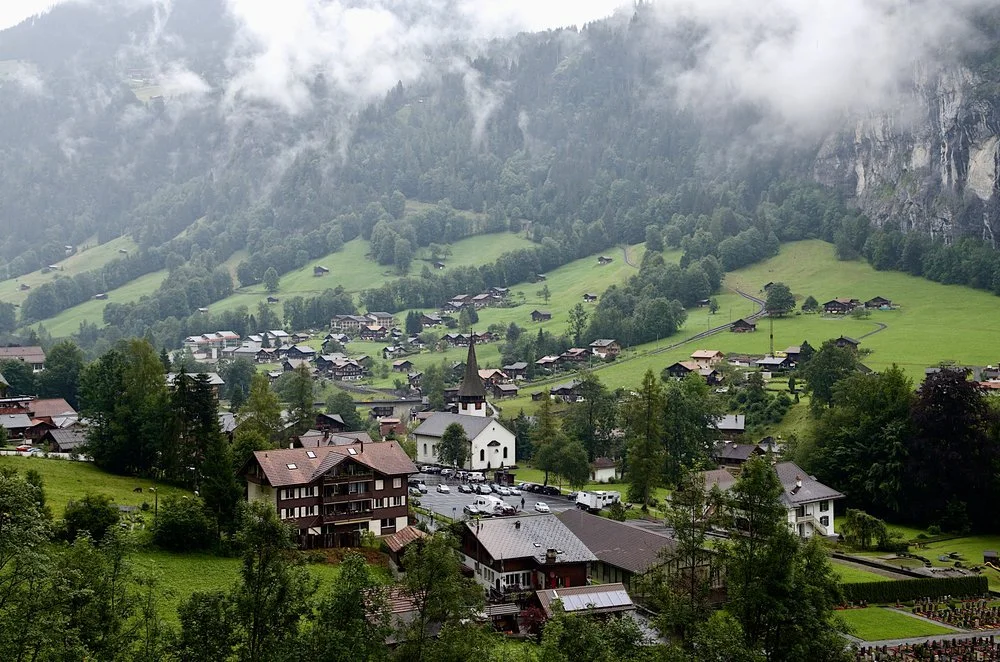
A glimpse into the charming town of Lucerne.
DAY 2
Depart for Lucerne.
Zurich → Lucerne is easy if you have elected not to rent a car.
Trains from Zurich HB run often and take about 1 hour to Lucerne HB.[Learn more] about transportation options.
⭐ Highlights visiting Lucerne:
Embark on the Mount Pilatus cog railway ride. (AKA "GoldenRoundtrip)
It’s the official name for the Boat + Cogwheel + Cable Car + Bus loop. [Video]From Luzern quay (by the train station), take the lake steamer to Alpnachstad (90 min).
⚠️ Ride early—mountain weather is clearer in the morning. [Location]Upon arrival at Alpnachstad, hop aboard the cogwheel railway
(which is the world's steepest cog rail) to the very top of Mount Pilatus.
<Open May through November, weather permitting>⚠️ Tip: Check the webcam at the pier first! If the summit is in thick clouds, skip the excursion.
Kapellbrücke - a charming covered footbridge over the Reuss River and Lucerne’s symbol. Walk across
Europe’s oldest wooden footbridge, known for its 17th-century ceiling paintings (many carefully restored after a 1993 fire).The Best Walk in town - stroll along the walkways between the Musegg Wall (9 ancient watchtowers) and be rewarded
with panoramic views of Lucerne's rooftops, the lake, and the surrounding Alps.It’s a four (4) km walk with a slight elevation gain. Start at Schirmerturm. [Route]
Overnight: Lucerne (1 night)
Distance: Zurich ---> Lucerne. 1 hr. by car or train.
DAYS 3 and 4
Explore the Interlaken region. The "town between the lakes" (Thun and Brienz) is a vacation resort.
The region is surrounded by mountains, forests, alpine meadows, and glaciers, plus numerous hiking and skiing trails.
Best Bike Ride: Lake Thun Loop. The ride circles Lake Thun, showing deep blue water and mountain views. You pass pretty villages, historic sites, and castles. The full loop is long (about 56 km / 35 miles), so riding just part of it is a great option.
Bike rentals are available everywhere, including the train stations.
Take a walk in Höhematte Park and the Höheweg.
Highlights are:
Various shops and restaurants.
Numerous events on or along the road.
Impressive view of the Jungfrau massif - a perfect photo spot.
Marvel at the flowers and paragliders.
If the weather is clear, a “MUST-DO” excursion is visiting Jungfraujoch, a top Alpine peak at 3,466 m (11,368 ft).
To reach this breathtaking destination, you can embark on the Jungfraubahn, which is Europe's highest-altitude railway.
—The Jungfraubahn cogwheel train takes you up the mountain on a slope up to 25°, with amazing views along the way.

🏔️ Getting to Jungfraujoch (Top of Europe)
Several routes reach the summit. For the best view, make a loop:
Ascend one way and descend the other to see both the Grindelwald and Lauterbrunnen valleys.✨ Top Choice: The Modern Way (Fastest) 🚠
Route: From Interlaken Ost rail station —-> Grindelwald Terminal
—> Eiger Express Gondola —> Eigergletscher —> Jungfrau Railway.Time: This is the most efficient route. The Eiger Express saves
47 minutes of travel time.Highlight: Breathtaking, "bird's-eye" views of the Eiger North Face from the high-speed cable car.
The 2nd option: The Classic Way (scenic).
Route: From Interlaken Ost rail station, take the train to Lauterbrunnen, then change trains to go up to Wengen. From Wengen, continue to Kleine Scheidegg and switch trains there for the final ride to Jungfraujoch.
Duration: 2 hrs. 20 min. to the top.
🚗 Access by Car:
Parking: If you aren't staying in Interlaken, both Lauterbrunnen and Grindelwald Terminal have large parking garages.
Easy Access: Drive to these towns and take the train or gondola there to skip the first part from Interlaken.
Tip: Before planning your mountain activities:
[Check the timetable] Schedules can change.
⚠️ Check the weather conditions on the top of the mountains - Webcams - Unless the forecast calls for good weather,
it would be a waste of time to venture on trails on cloudy/rainy days.—What to wear at the top: In the summer, a down jacket is probably not needed. A long-sleeve shirt, a fiber pile vest, and
a rain jacket should be sufficient. Outside on the plateau, the perceived temperature will depend on the wind conditions.
Visit Grindelwald; the town has pretty chalets in grassy, hilly meadows surrounded by mountains. Walk the trails for great mountain views. Grindelwald is reachable by train or car.
Scenic Mountain Short hikes:
Lauterbrunnen to Wengen to Wengernalp via Mendelssohnweg: Distance: 7.5 km. One-way, moderate trek.
Wengen to Mannlichen: 6 km one-way, moderate trek.
Mannlichen to Klein Scheidegg: 5 km one-way, moderate trek.
A great app to download on any hike: AllTrails.
Overnight: Interlaken or Lauterbrunnen (2 nights)
Distance: Lucerne ---> Interlaken. 1.5 hrs.
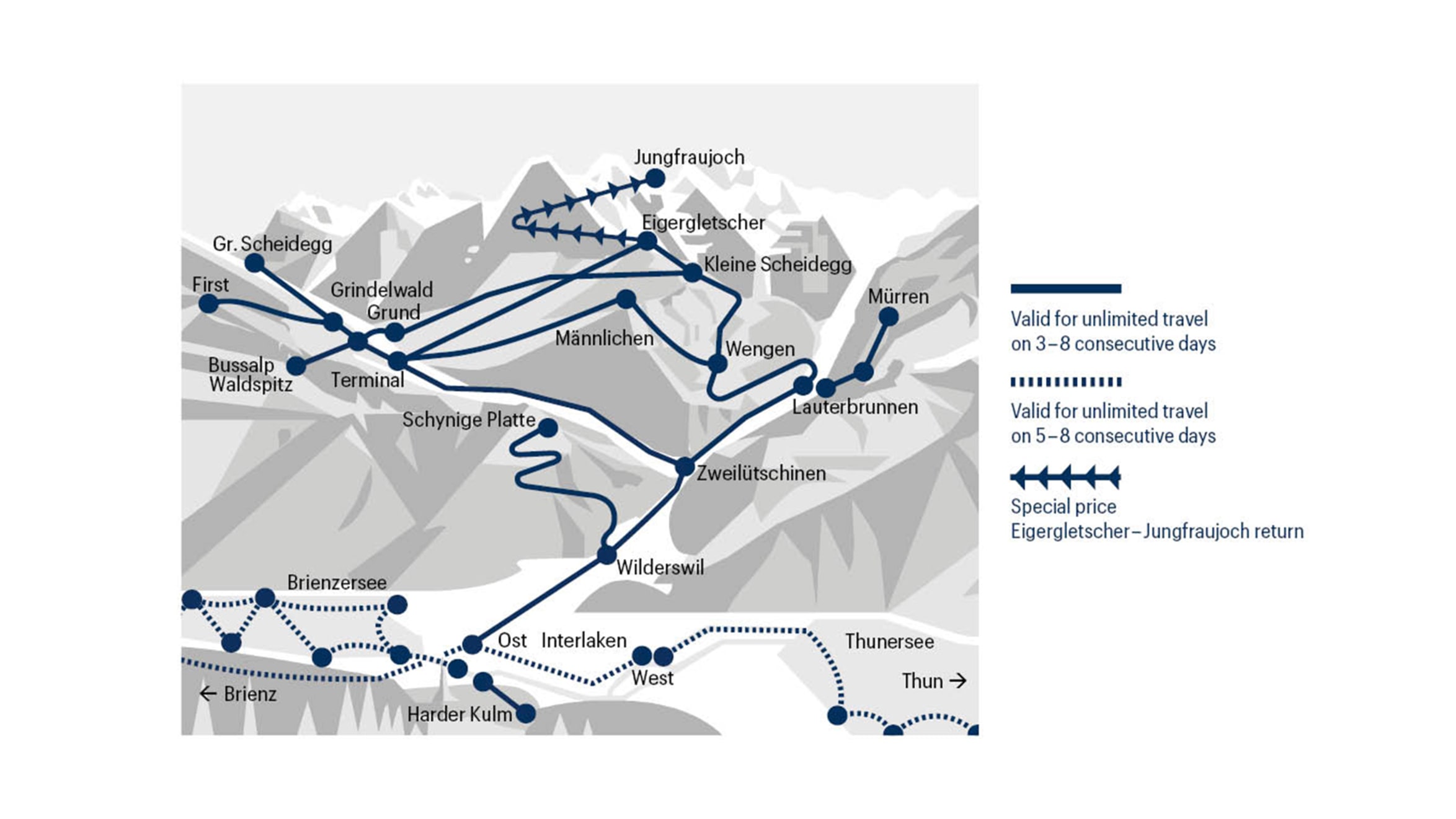
You can pick up the train on all point-to-point treks.

Eating and drinking
DAYS 5 and 6
Start early and travel from Interlaken to explore Zermatt. [Map]
Zermatt is car-free. Drivers park in Täsch’s convenient garage and take
a 12‑minute train ride. [Parking information]The Täsch train to Zermatt is a quick 5-km ride.
ℹ️ What to do in Zermatt in summer? Hiking is very popular.
The best all-around hike: Zmutt Loop. The trail is a 10-km round trip. Difficulty: Easy - Moderate
The Zmutt Loop is a favorite lunch destination for visitors looking for an easy and scenic walk.
Most people walk along the low route that heads south on Zermatt’s main street, Bahnhofstrasse, and along the left (west) side of the Zmutt River.
Best Summit Panoramic Viewpoints:
Matterhorn Glacier Paradise - Observation platform with photo point, restaurant, and shop. [Tickets and Information]
Getting there: Visitors are transported by a 3S cable car, which is a fast, modern gondola. [cable car route]
Gornergrat - the magnificent view of the Matterhorn is unforgettable. [Tickets and Information]
Getting there: The Gornergrat cogwheel railway takes you up from the village to 3,100 meters. [train route]
Overnight: Zermatt. (2 nights) We recommend reserving accommodations at least 3 months in advance.
Distance: Interlaken ---> Zermatt, 2.5 hrs.
DAY 7
Depart Zermatt for Bern.
Visit Montreux and the impressive Château de Chillon. Highlights of the castle are its dungeons, grand halls, and courtyards. [Getting there]
Afterward, stop for lunch in Lausanne at the lively city center, then continue to Bern.
Bern - has been described by many visitors as Switzerland’s most beautiful city.
Overnight: Bern
Distance:
Zermatt ---> Montreux, 2 hrs.
Montreux ---> Lausanne, 30 min.
Lausanne ---> Bern, 1.25 hr.
DAY 8
Visit the charming medieval city of Bern, then depart late afternoon for Zurich (about 2 hours by car).
Enjoy Bern’s historical city center. Visitors can find cultural sites, restaurants, bars, and specialty shops. Bern is compact
and easy to explore on foot. The well-preserved old town is pedestrian-friendly.Bern has a special relationship with bears, and the Bear Park (Bärenpark) is a popular attraction. Visitors can watch bears
along the Aare River in the wild. Seeing them up close is unforgettable.Overnight: Zurich.
Distance: Bern ---> Zurich, 2 hrs., 125 km.
DAY 9
Depart Zurich for your return home or choose your next European destination.


-
Where should I buy chocolates in Switzerland ?
Do NOT head to the grocery store to buy famed Swiss chocolate. Go to local chocolatiers ! You won’t be disappointed.
What language do they speak ?
Switzerland speaks multiple languages. Swiss is not a language. Switzerland has four official languages: German, French, Italian, and Romansh.
What is the voltage ?
Switzerland has two associated plug types, types C and J. Plug type C is the plug which has two round pins and plug type J is the plug which has three round pins. Switzerland operates on a 230V supply voltageand 50Hz.
What is the currency ?
Switzerland remains with the Swiss franc, usually indicated as CHF. While Switzerland is not part of the European Union and thus is not obliged to convert to the Euro, many prices are nonetheless indicated in euros so that visitors may compare prices. Also some tourist areas will accept Euros. ATM’s everywhere.
How big is Switzerland ?
Switzerland is about as big as State of Maryland, or slightly bigger than Massachusetts. You can drive from one end to the other ( Zurich to Geneva ) in about 3-4 hours.
Do I need a visa ?
NO visa is needed. Citizens of the United States with a valid U.S. Tourist passport can travel to Switzerland for a short stay of up to 90 days.

Search for your hotel


Average cost:
(EXCLUDING AIRFARE)
$$$ USD for two (2) people
Budget: $3,500
Moderate: $4,000
Luxury: $4,800 +

🌤️ Climate
In the summer, you can expect temperatures of up to 32 °C (90 F) in the lower valleys. But it could easily be 15 °C (59 F) on a rainy day and freezing on the high mountain top. Afternoon thunderstorms are common.
You can have a week of rain as well as a week of cloudless skies almost any time of the year.
April, September, and October are your best chances of drier and less cloudy days


Switzerland Gallery
🎬 Video




No copyright infringement is intended on this website by travelwildnow.comSources: wikipedia.org