
PORTUGAL 10 Days
Portugal is a southern European country next to Spain. Its Atlantic Ocean location shapes its culture. It’s the cheapest country in Western Europe, and travelers can explore it easily by car. Popular dishes include roast kid, salt cod, and grilled sardines. Every region has its own history, scenery, and food.
The whole country is family-friendly and about the same size as Iceland or Hungary.

🇵🇹 Essential Tips:
In Lisbon or Porto, use public transport instead of driving — traffic is heavy, and parking is hard to find.
In rural Portugal, people still use cash more. Many restaurants and shops don’t take credit cards.
Visitors from some countries, like the USA and Canada, can travel visa-free for 90 days.
The best souvenirs are vacuum-packed cheese, wine, and olive oil.
Portugal can be overcrowded and busy in high summer. Autumn is the best time to visit.
Portugal Travel Guides: Fodor’s Portugal, Rick Steves Portugal, and Lonely Planet Portugal.
Sign up for great travel stories and ideas on National Geographic online!
For Emergency services, dial 112 — free from all phones.
Currency: Euro.
DAY 1
Arrive at Lisbon airport and transfer to your hotel.
[How to get from the airport to the city center]
Taxi and Airport Transfer services are the most comfortable and expensive.
Uber and Bolt are the top ride-hailing services.
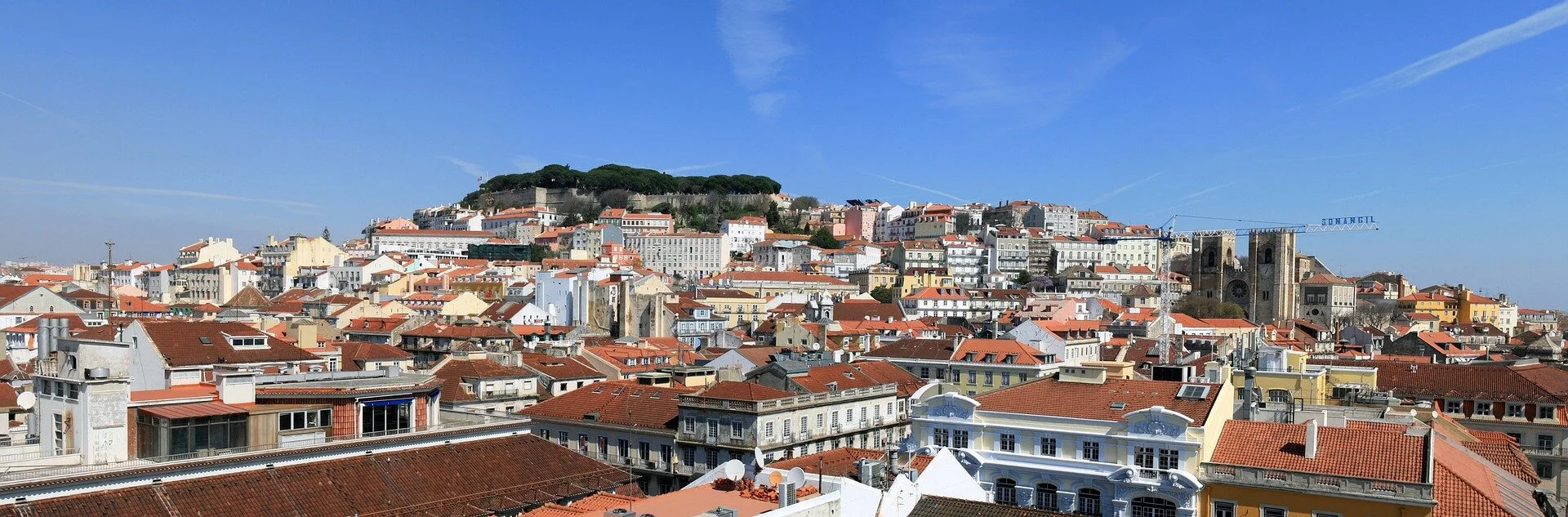
Lisbon, Portugal’s capital, has about 3 million people. One of the world’s oldest cities, it sits on seven steep hills with narrow, winding streets. Old buildings mix with modern design, lively neighborhoods, parks, and famous festivals.
Lisbon consists of six (6) districts. The most popular tourist districts are Baixa, Alfama, and Chiado.
Baixa - stroll along the Rua Augusta - This busy pedestrian street has mosaic floors, outdoor cafés, world shops, and sometimes street performers and sellers. Rua Augusta connects with Rossio Square. Rossio Square is the liveliest square in Lisbon.
Alfama - is one of Lisbon's oldest neighborhoods, once home to fishermen in its narrow streets. Today, it has become a trendy and lively area.
Chiado - is an elegant, sophisticated district of theaters, bookshops, old-style cafes, and international shops.
Best location to stay - Baixa is the choice.
Baixa is close to the Bairro Alto, which is known for its nightlife. [read more]
Overnight: Lisbon (3 nights)
-
—Alfama is the oldest neighborhood of Lisbon and contains the majority of historical sights and Fado bars.
—Baixa liocated in the heart of the city center is an elegant district featuring impressive squares and boulevards.
—Bairro Alto on the other hand is a residential neighborhood which is also famous for it’s nightlife.
—Chiado, for the most part a shopping area offers a mix of old and modern shops as well as cafes.
—Belem is a short drive out of the center and famous for its palace, promenade and its Pasteis de Nata.

Learn more about Lisbon
DAYS 2 and 3
Visit the oldest neighborhood of Lisbon - Alfama.
The steep streets of Alfama are lined with shops selling traditional crafts and cafes.
Castelo de São Jorge - a medieval castle sits atop the neighborhood and offers
great city views. [Location]Miradouro da Graça - a well-known spot for dramatic city views.
Location: Calçada da Graça, 1100-265 Lisboa.
Castelo de São Jorge and Miradouro da Graça are a 10-minute walk apart.
Miradouro de Santa Luzia and Miradouro das Portas do Sol – these two viewpoints are next to each other and are best visited
late afternoon or early evening, when the sun lights up Lisbon’s orange rooftops.Fado Museum – learn about the evolution of this melancholy type of music that Portugal is famous for.
Electric Bike tours - a fun way to see the city. The e-bikes make the many hills easy.
Walking tours - a guided, informative walking tour of Lisbon that usually takes about half a day. Note: Lisbon is a hilly city.
Lisbon Urban Adventures and Inside Lisbon Tours are two recommended companies.
Visit Sintra - a fairy tale town known for its many historic palaces and castles. An excellent day trip.
Getting there: an easy 40-minute train ride from Lisbon.
We strongly discourage driving to Sintra, as there are heavy traffic jams and very limited car parking.Direct rail services run from Rossio Station in the Baixa district to Sintra Station.
Within Sintra, highlights include:
Stroll the historic center of Sintra along the narrow alleys, past shops selling regional products.
Sintra’s historic center is about a 20-minute walk from the Sintra train station.
Palácio Nacional da Pena -a colorful, beautiful palace and a famous example of Romantic architecture in Europe. It’s also
a key symbol of Portugal’s national identity.Sintra National Palace - it is one of the best-preserved medieval royal houses. The palace was built in the Moorish period.
Quinta da Regaleira - is a UNESCO World Heritage site and a must-see in Sintra. This Neo-Manueline mansion blends
Gothic and Renaissance styles, with carved stone, colorful stained glass, and lavish decoration. Its vast, enchanted gardens
make it unique.
Overnight: Lisbon
Distance: Lisbon —> Sintra, 40 minutes.

DAY 4
Embark to Coimbra with stops in Obidos, Nazaré and Fatima.
Óbidos is a charming Portuguese town with old walls, cobbled streets, bright houses, and a large medieval castle — all可seen in half a day.
The best activity in Óbidos is to Walk the Castle Wall.
The walk is about 1.5 km and gives great views of the old town and the nearby countryside.
Be advised: The Wall Walk has no railings and is uneven in some spots.
Óbidos is renowned for a popular Portuguese liqueur (cherry brandy) called ginjinha. Ginjinha bars are popular in Óbidos.
Next stop is Nazare—a popular seaside resort on the western coastline.
Possibly Portugal’s most famous fishing town, known for some of the world’s
biggest waves (up to 30 m), mainly in winter.Take the funicular to Sitio da Nazare (the top of Monte Sitio) for superb views.
Afterward, journey to Fatima.
Fatima - a major Catholic shrine to the Virgin Mary. Its sanctuary draws millions of pilgrims worldwide.
Continue to Coimbra.
Overnight: Coimbra (1 night)
Driving distance:
Lisbon to Obidos, 1 hr. 15 min. 85 km
Obidos to Nazaré, 40 min. 40 km
Nazaré to Fatima, 1 hr. 60 km
Fatima to Coimbra, 1 hr. 80 km
DAY 5
Explore Coimbra - home to the oldest and most prestigious university in Portugal.
Coimbra is a fascinating and vibrant city with all that is associated with a university town.
The picturesque town consists of medieval quarters, where cobblestone streets are flanked by bars, boutiques & eateries.
Afterward, continue to Pinhao. Spectacularly located at the confluence of the Douro and Pinhão rivers, Pinhão lies at the very heart of northern Portugal’s famous Port wine-making region.
Overnight: Pinhao (2 nights)
Where to stay: The Vintage House-Douro, Quinta Nova-Luxury Winery House, and LBV House Hotel are popular.
Driving distance: Coimbra ---> Pinhao, 2.5 hrs.

If you're short on time or skipping Lisbon, fly into Porto and join the trip on Day 6.
United Airlines and Tap Air Portugal offer the best flights.

Source: Tapooz travel. Distance: Porto <—> Pinhao, 1.5 hr. one-way.

Stunning scenery
DAY 6
Discover the Pinhao to Regu region.
—The best approach to see the region is with a Guided Walk Tour. Highly recommended.
—The renowned Douro Wine region is one of the oldest wine areas in the world.
—The landscape is beautiful with lush green hills and small, quaint villages. The drive is beautiful and perfect for taking photos.
—Surrounded by wineries, you can take a formal wine tour or simply visit when you see an “open” sign.
Walk Along the Banks of the Douro.
—Route of Walk—Leave the town of Pinhão, cross the bridge over the River Pinhão, and walk along the banks of the River Douro. Pass the Restaurante Cais da Foz, head upwards towards Quinta de La Rosa, and continue in the direction of Chanceleiros. Venture through the Douro terraces.
Enjoy the hillside and the river below. Feel the peace and beauty of this special place. Distance: 10 km round-trip, 3 hours.
Take a ride on the Historic Douro Train.
The trip goes from Pinhão to Tua. The train offers a calm, timeless ride with lovely views of the Douro River.
Enjoy a 1 or 2-hour traditional Rabelo boat tour on a breathtaking stretch of the Douro River.
Just like the train, the round-trip boat goes from Pinhão to Tua. The tour is offered by either
Companhia Turística do Douro or Magnifico Douro.Tickets can be purchased at the jetty in Pinhão at The Vintage House Hotel.
If you have extra time, visit a couple of picturesque villages.
Provesende - is a charming village. Explore the village on foot, as it is a very quiet and almost untouched town.
Another village further away is Aramante. [video]
Visit the Mateus Palace. This palace, set in lovely gardens on a large estate, is one of Portugal’s finest examples of Baroque civil architecture.
Food lovers—Douro Valley is known for its various gastronomic specialties, such as roast kid (goat) and carne maronesa (the meat from a special kind of cattle only found in this area of Portugal), and doces cristas de Galo (pastries in the shape of a rooster´s comb).
Overnight: Pinhao
Driving distance:
Pinhao ---> Provesende, 20 min.
Pinhao ---> Mateus Palace, 45 min.
Regua ---> Pinhao, 30 min.
DAY 7
Continue to tour the Douro River Valley as described on Day 6.
Afterward, journey to Porto via the N-222 road.
One of the world's best scenic roads is the N-222 from Pinhao to Peso de Regua.
Details: 27 km, 93 bends, and views of the Douro Valley.
Porto is a seaside city famous for its beautiful bridges, scenic waterfront, and lively culture with many art galleries, theaters, and music spots.
Porto is the birthplace of port wine production. Port wine is usually sweeter, stronger, thicker, and has more alcohol than regular wine.
Some of Europe's best food is here. Gourmet steakhouses, brunch cafes, and food markets.
Overnight: Porto (3 nights)
Driving distance: Pinhao ---> Porto, 1.5 hr. / 130 km

DAYS 8 and 9
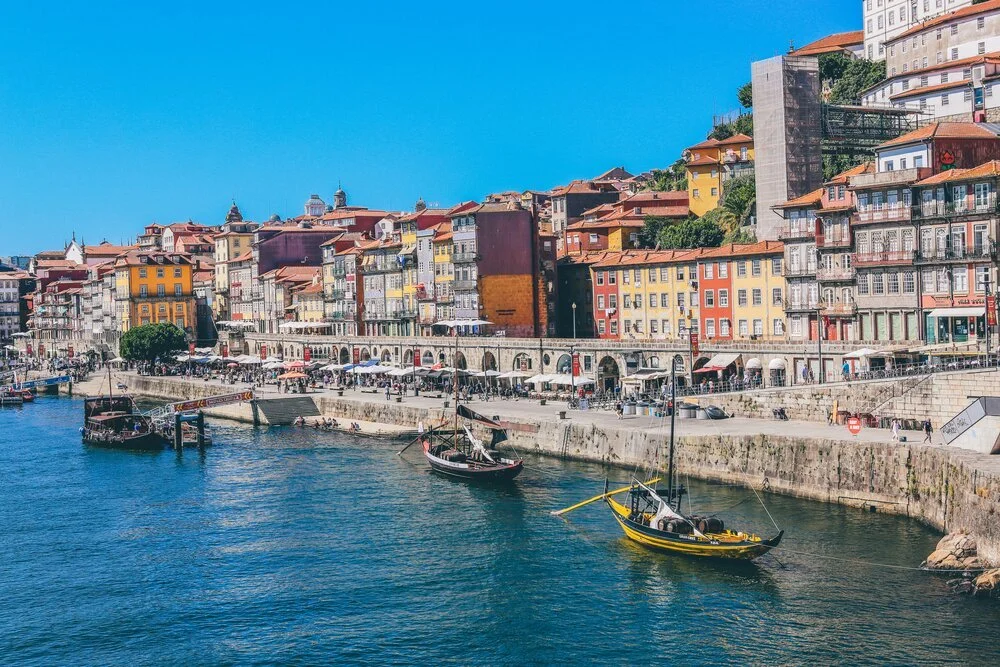
Discover the medieval Ribeira (riverside) district of Porto with its cobbled streets, shops, and cafés. The riverside is a pretty square where locals and tourists meet. There are
bars and restaurants around every corner.Explore the Ribeira by taking a one (1) hour cruise. Your guide will explain Porto's history, main landmarks, and the bridges you'll see.
The Six Bridges Cruise is particularly popular among tourists.
Discover the Bolhão Market, a famous market in the city, where products such as vegetables, fruits, and others are sold.
Book a Walking Tour. Porto combines Portuguese charm and history. Its compact
historic center is best explored on foot.Walk the Dom Luis I Bridge. An industrial icon of Porto, this double-decker arched bridge opened in 1886. Its upper deck has a pedestrian walkway. It spans the Douro and rises nearly 45 meters.
Hop on the Gaia Cable car for great views, which connects the upper deck of the Luís I Bridge and the Pier of the city of Gaia.
[Learn more] [Tickets]
Head over to the Foz do Douro - Porto’s seafront and finest neighborhood. Facing the Atlantic, you will get to enjoy great sunset views. Getting there: taxi, 10 minutes, and inexpensive.
Overnight: Porto.
DAY 10
Depart from Porto airport for your flight home.


Average cost:
(EXCLUDING AIRFARE)
$$$ USD for two (2) people
Budget: $3,200
Moderate: $3,800
Luxury: $4,500 +


🌦️ Climate
During the months of June through October, you are most likely to experience good weather with pleasant temperatures.
During the months of November through early May, you have a high chance of precipitation.
The warmest month is August with an average maximum temperature of 25°C (77°F).
The coldest month is January with an average maximum temperature of 13°C (55°F).

Portugal Gallery
🎬 Video




Sources: Tapooz Travel, wikipedia.orgNo copyright infringement is intended on this website by travelwildnow.com