
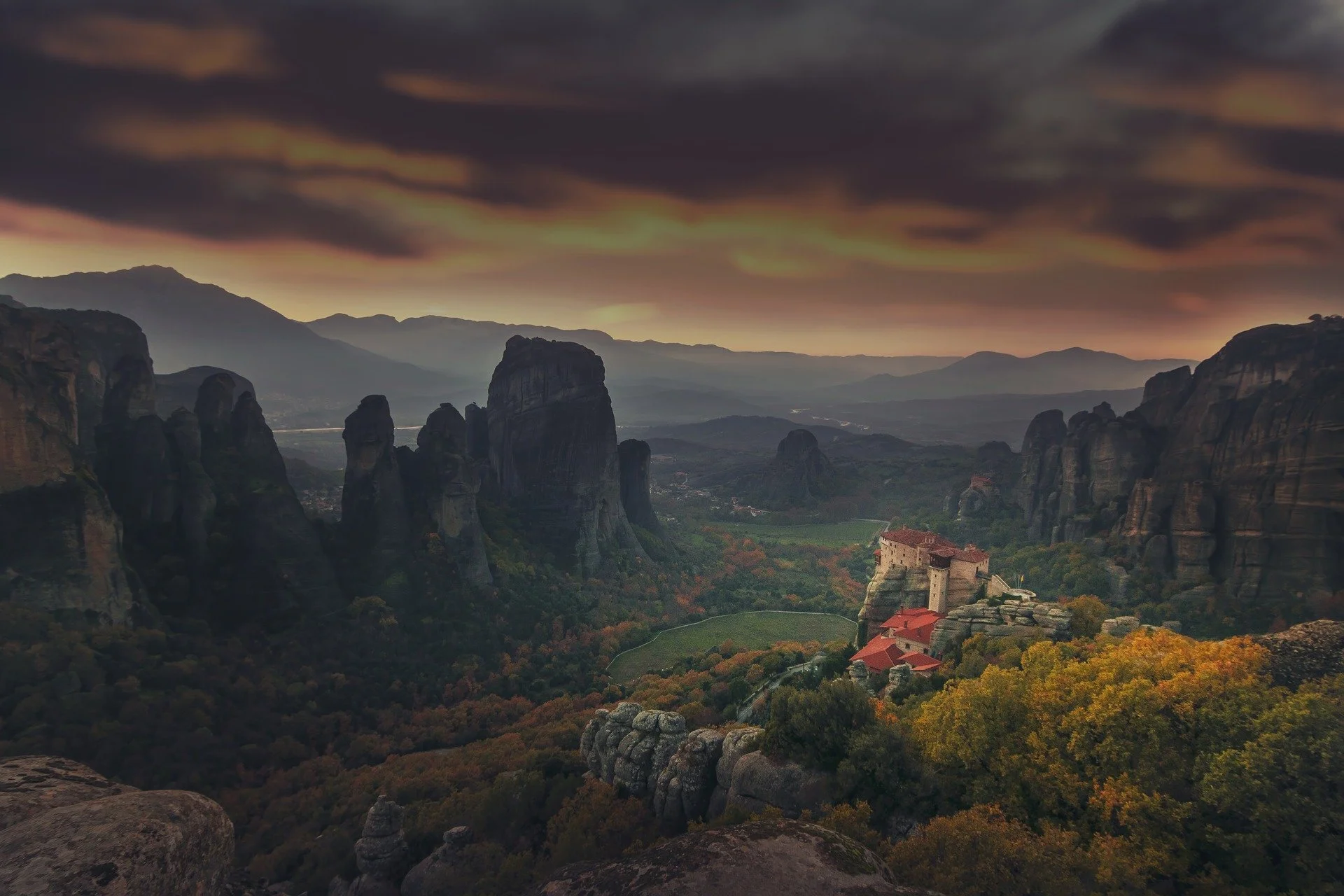
NORTHERN GREECE EXPERIENCE: Vikos Gorge and Meteora, 7 Days
Northern Greece is often overlooked by travelers drawn to the southern islands, yet the region of Epirus offers a rugged, alpine beauty unlike anywhere else in the country. This circular route begins and ends in the lakeside city of Ioannina, venturing deep into the Northwest's most dramatic landscapes.
From the 48 stone-built villages of Zagori—famed for their 18th-century mansions and slate roofs—to the deep gorges of
Vikos-Aoos National Park, this journey showcases the "mainland" at its most authentic. The route then pivots to the towering sandstone monoliths of Meteora, where Eastern Orthodox monasteries sit perched on precipitous cliffs, before winding down to the coastal charm of Parga.
<The Photo Gallery can be found at the bottom of this page>
DAY 1
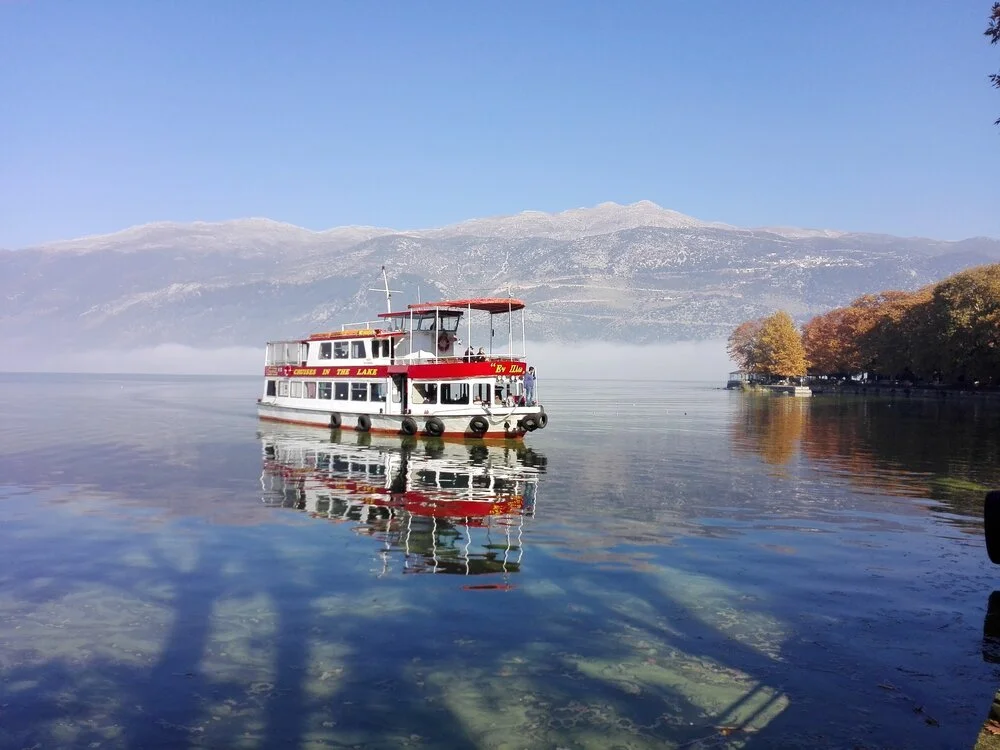
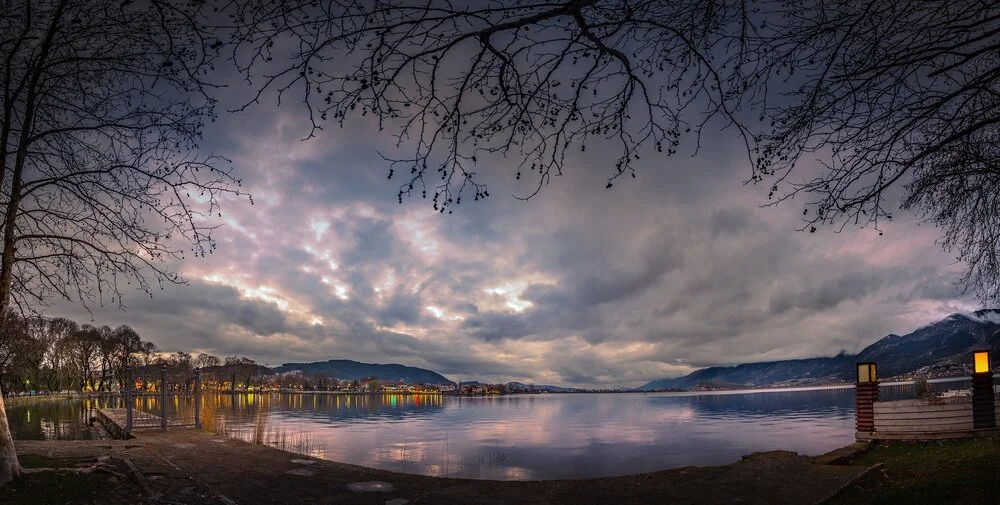
Ioannina, the capital of the Epirus region, spreads out around beautiful Lake Pamvotida. A walk through the city brings you to the imposing castle of Ioannina, built in 528 AD. The Ottoman mosque of Veli Pasha and the entire historic center of the town are unique attractions.
If time permits, unwind at a local cafe and indulge in one of the traditional Ioannina desserts.
The exceptionally delicious baklava and the other syrup pastries are but a few of the flavors that captivate visitors.
How to get there:
Daily flights from Athens. (1-hour flight time) Aegean Airlines is the national carrier.
By car —from Thessaloniki on the Egnatia Highway, 3 hrs.
—from Athens on the scenic route over the Rio Antirrio Bridge in 5 hours.
Useful information to plan your trip - with options that change from season to season, Ioannina is a great destination.
Overnight: Ioannina. [Where to stay]

Monodendri, Zagori Village
DAY 2
Explore the villages of Zagori.
Early morning, you travel to Zagori in Epirus, known for its stone villages and wild, scenic landscape.
Tourism is local. You won’t see tour buses or big crowds—Zagori is truly off the beaten path in Greece.
Map and description of the main villages.
Monodendri – one of the nicest villages built in the traditional style with stone houses, stone roofs, and even stone pavement.
It’s a good place to stay.Tucked deeper in the mountains is the village of Papigo, which is the most visited due to its cobblestone alleys and the traditional stone houses.
It’s a “must-see” location. Also, a good place to stay.Local delicacies to try are the smoked metsovone cheese, spicy vasiloteri cheese, spanakopita (spinach pie), and Greek lamb souvlaki.
Overnight: Papigo or Monodendri [Where to stay]
You may want to add an extra day to enjoy the people, food, and wine.
Driving time:
Ioannina —-> Papigo, 70 minutes
Ioannina —-> Monodendri, 45 minutes
Monodendri —-> Papigo, 45 minutes

When you leave Ioannina: head north on the National Road (E65), the routes split into two entirely different directions well before you enter the mountain villages:
The Turn-off for Monodendri: About 15–20 minutes north of Ioannina, you will hit a major junction where you exit right to head into Central Zagori. This road takes you up toward Asprangeloi, Vitsa, and ultimately dead-ends at Monodendri.
The Route to Papingo: To reach Papingo, skip the first Central Zagori exit. Stay on the main National Road north to Kalpaki. In Kalpaki, turn right (east) toward Aristi and follow the mountain switchbacks up to Papingo.
If you were to go to Monodendri first, It would add a long detour: drive up one side of the gorge, back down to the valley, then up the other side to reach Papingo.

DAY 3.
Discover the spectacular Gorge of Vikos. This is a full day of activities.
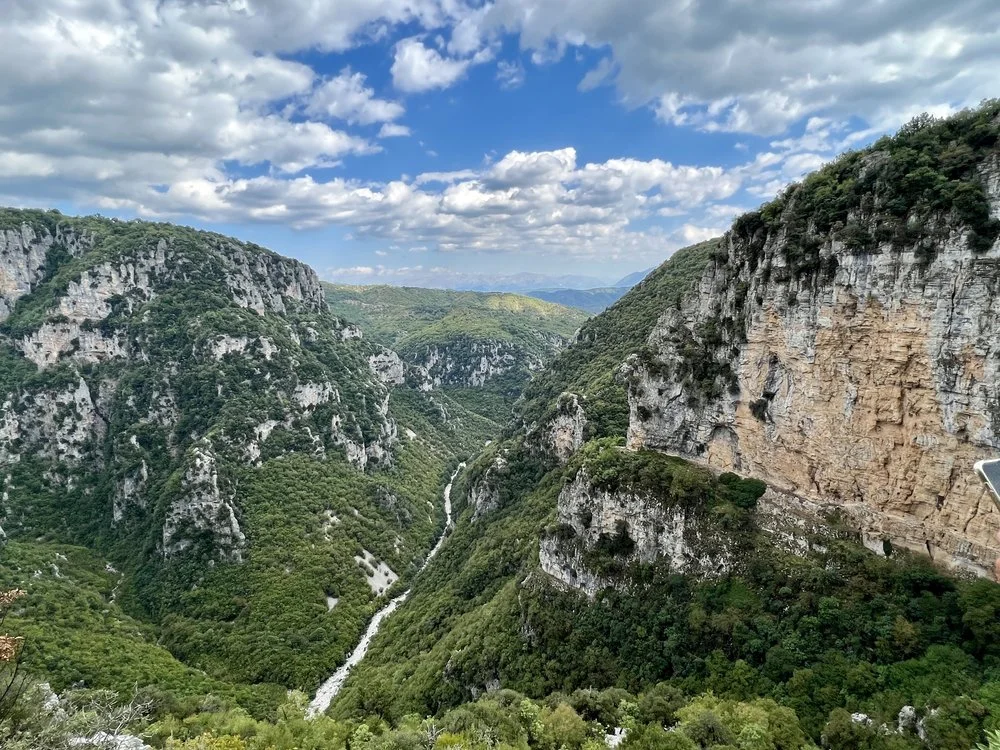
Visit Vikos-Aoos National Park, comprising the Vikos Gorge, carved by the Voidomatis River. The park is one of Europe’s last wild refuges, with many habitats and ecosystems. The Vikos Gorge, 20 km long, is listed in the Guinness Book of Records as the world’s deepest narrow canyon relative to its width. Its main stretch from Vikos to Monodendri reaches about 1,000 meters deep.
Vikos Gorge has some of Greece’s best hikes, from 1-hour walks to 5-hour treks, for all fitness levels.
🥾 Best hike: Vikos Gorge Trail is a 12 km point-to-point moderate trail located near the villages of Vikos and Monodendri.
The hike takes 5-7 hrs. Should you choose this hike, you MUST stay overnight and drive to Meteora on Day 4.🥾 Moderate hike: Ice Age Voidomatis Trail, a 10 km trail moderately trafficked RT near Klidonia/Papingo. [location]
For non-hikers, there are several viewpoints, all easily reached.
Agia Paraskevi Monastery: offers one of the best views of Vikos Canyon. From Monodendri village, the monastery
is a short walk. [trail]
The River Adventure: For non-hikers, river rafting on the Voidamatis River has become a very popular choice.
The river sits in stunning scenery and is perfect for beginners.
⚠️ Note: You cannot combine the full gorge hike and rafting in a single day. Choose one, or add an extra day to the region.
Choose your Logistics: Path A or Path B:Path A: The Full Gorge Hike (For Avid Hikers)
Activity: Hike the Vikos Gorge Trail (12 km, point-to-point, moderate, 5–7 hours) between the villages of Vikos and Monodendri.
Logistics Warning: Because this hike takes the entire day, you cannot make the drive to Meteora tonight. You
must extend your stay in Zagori for a second night and drive to Meteora tomorrow morning.Overnight: Papingo or Monodendri.
Path B: Highlights & Moving On (For Casual Hikers & Sightseers)
Activity: Enjoy shorter walks and viewpoints. Walk to the Agia Paraskevi Monastery from Monodendri village
(a short walk offering one of the best canyon views). Alternatively, go river rafting on the beginner-friendly Voidomatis River.⚠️ Note: You cannot combine the full Vikos Gorge hike and rafting in a single day.
Logistics: In the late afternoon, make the 3-hour drive from the Zagori region to Kastraki, a picturesque town at the
feet of Meteora.Overnight: Kastraki (2 nights)

Optional: add a day if you like hiking

Map of Monasteries
Source: mappingeurope.com
DAY 4.
Full day discovering and hiking in The Meteora.
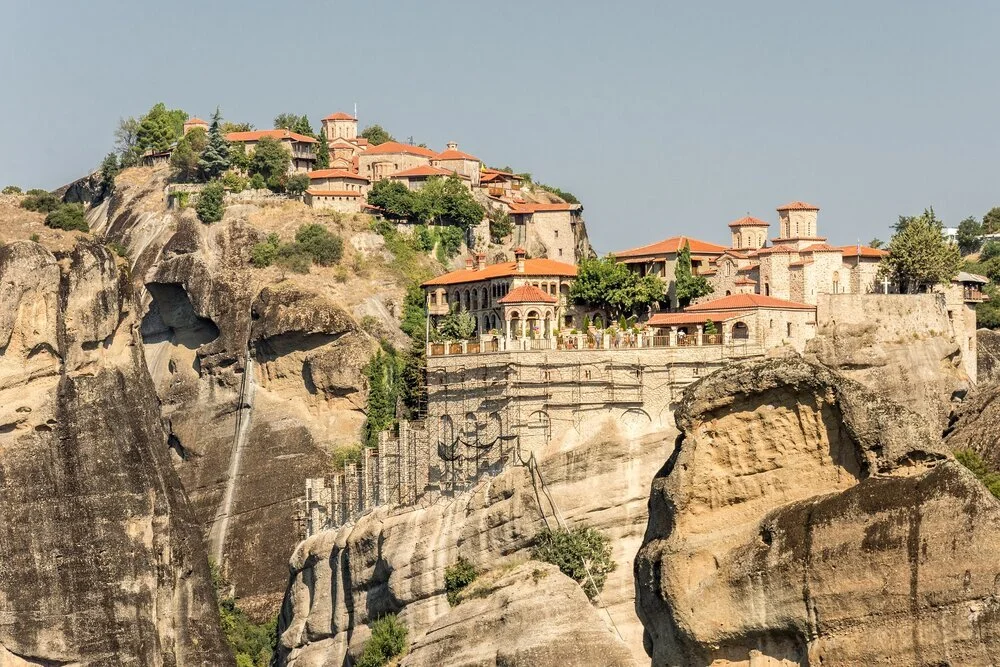
Explore Meteora. Hiking among towering rock monoliths and visiting monasteries built on the cliffs. The Meteora is a UNESCO World Heritage Site.
Recommended: A circular walk starting in Kastraki.
Hiking: 4 hrs., rated—moderate.
The following monasteries are located near the road circuiting Meteora. Clockwise, you'll find:
St. Nikolaos Anapafsas—this is the first monastery you'll reach on the way to Meteora. It's a 1 km walk from Kastraki village.
St. Barbara of Roussanou—the main cathedral, celebrating the memory of Santa Barbara, was founded at the end of the 16th century.
Varlaam—the Holy Monastery of Varlaam is the second-largest monastery, located across from the Great Meteoron Monastery.
Great Meteoron—the Holy Monastery of Great Meteoro is the largest and oldest, from the 14th century. It was called "suspended in the air" (Meteoro) because it sits atop a huge rock.
Holy Trinity—the Monastery of Holy Trinity is the most difficult to reach, but once you get to the very top, the panoramic view of the surroundings is simply captivating!
St. Stephen—this monastery is the easiest to reach. A short bridge leads to the entrance, making it good for visitors with limited mobility who still want a true Meteora experience. The dress code is enforced as strictly as at Holy Trinity.
⚠️ Strict Dress Code Enforced: To enter any of the holy sites, all visitors must dress respectfully. Men must wear long pants, and women must wear long skirts. Sleeveless shirts and shorts are strictly forbidden. Many monasteries provide or rent
wrap-around skirts at the entrance if needed.Most people who visit Meteora stay overnight either in Kalambaka or in the smaller village of Kastraki.
Kastraki is smaller and closer to the monasteries. Most people prefer staying here.
Overnight: Kastraki
Parga, a place to relax
DAYS 5 and 6
Depart for Parga, nestled in a picturesque bay.
Nested between lush green hills & the clear waters of the Ionian Sea.
A nice way to end a holiday.The resort town is known as “The Riviera of the Epirus Region”.
Walk by the waterfront lined by tourist shops, beautiful, stylish restaurants, and little bars to drink or eat with a view.Valtos and Lichnos are the best-known beaches.
Valtos Beach: just past the Venetian castle is a huge crescent bay with golden sand, water sports, and lively beach bars.
Lichnos Beach: tucked in a peaceful cove lined with olive trees just minutes from town, Lichnos has calm,
clear waters and interesting sea caves to explore.
Overnight: Parga (2 nights)
Distance: Kastraki —> Parga, 3 hr, 15 min.
DAY 7.
Depart from Parga and arrive in Ioannina by afternoon, and embark on another Greek destination or return home.
Distance: Parga —> Ioannina, 1 hr: 15 min.


Average cost:
(EXCLUDING AIRFARE)
$$$ USD for two (2) people
Budget: $1,800
Moderate: $2,400
Luxury: $3,200 +

Search for your hotel

🌤️ Climate

In May, June, September, and early October, you will experience good weather with pleasant average temperatures that fall between 20 degrees Celsius (68°F) and 26 degrees Celsius (80°F).
July and August are the warmest months. It is peak season and the most crowded.
The months of mid-October through early-April have a high chance of precipitation and cooler temperatures.
Northern Greece Gallery
🎬 Video







References: mappingeurope.com, wikipedia.orgNo copyright infringement is intended on this website by travelwildnow.com