
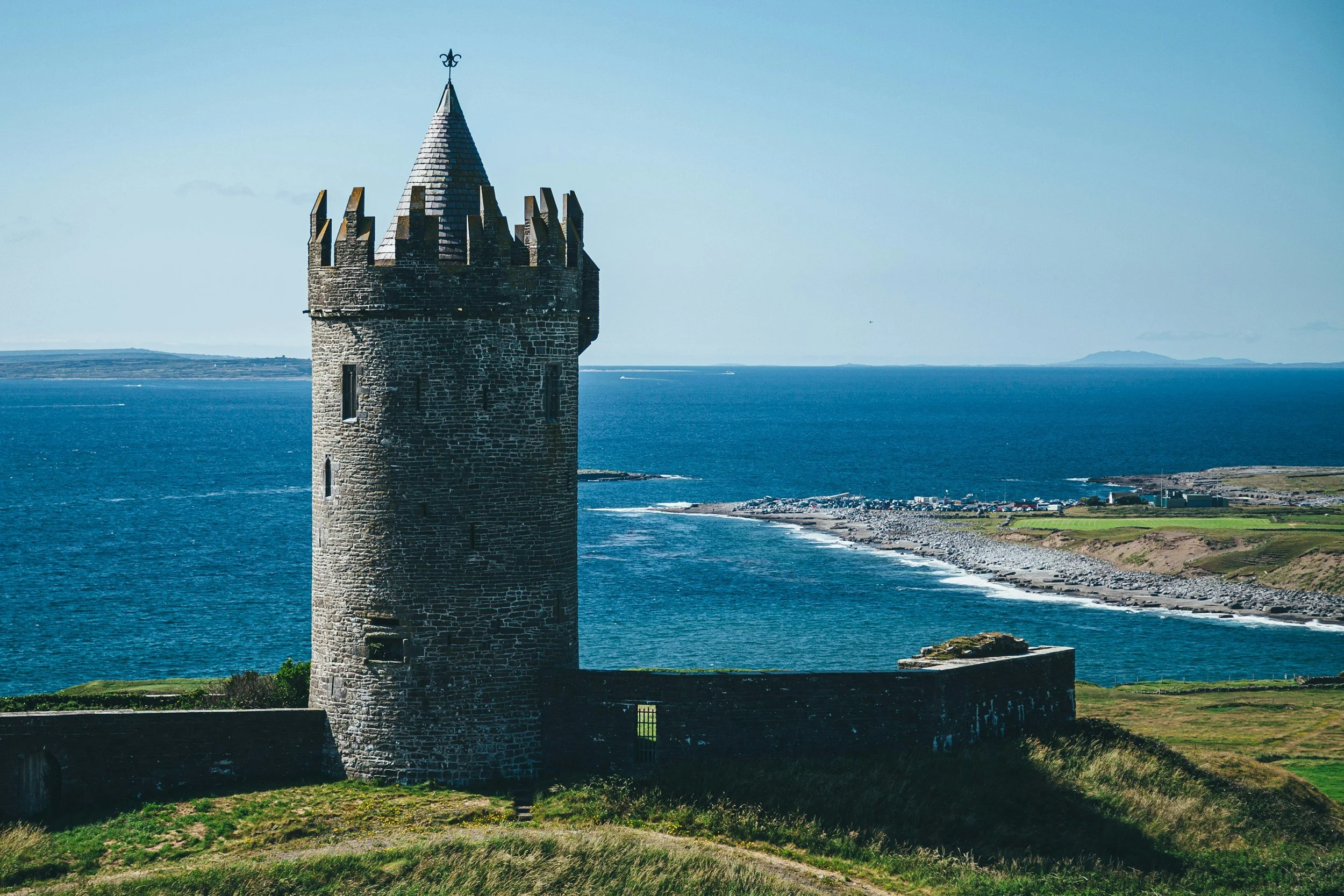
IRELAND 11 Days
From the cobblestone streets of Dublin to the medieval charm of Kilkenny, this journey captures the heart
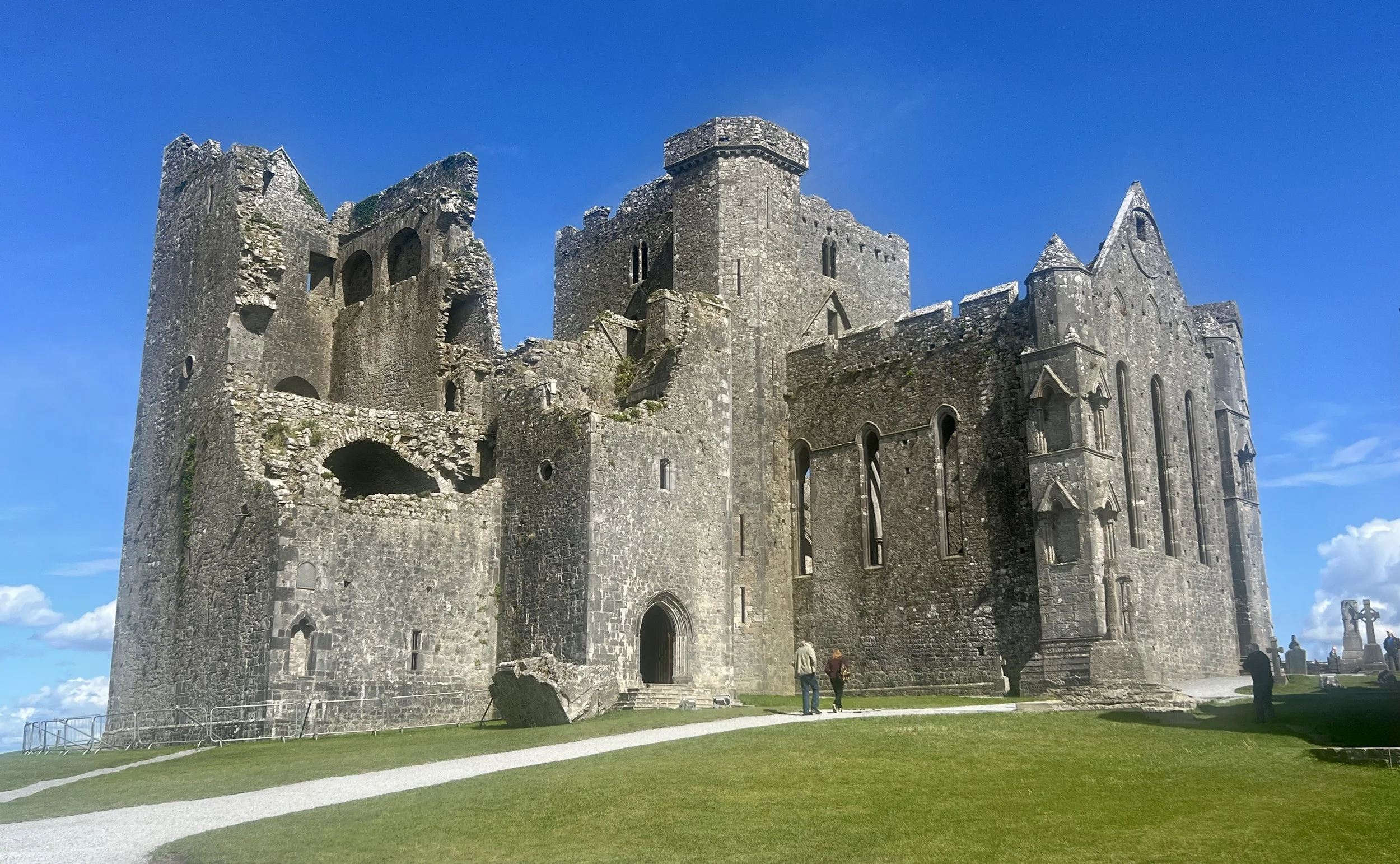
of Ireland before heading west to the rugged Wild Atlantic Way.Known affectionately as the Emerald Isle, Ireland is a land of dramatic contrasts, where the sheer drop of the Cliffs of Moher meets rolling, neon-green hills. Its history spans millennia, featuring Neolithic wonders like the 5,200-year-old Newgrange tomb, crumbling monastic ruins, and ivy-clad castles. But the true magic lies in the people—the famous Irish "craic" found in lively pubs over a pint of Guinness and traditional music.
Today, Ireland seamlessly blends this heritage with a high-tech pulse, serving as a global hub for medicine
and technology.<Scroll down to the bottom of the page to view the Photo Gallery>
🇮🇪Essential Tips:
Travel Guides: Fodor’s Ireland and Frommer’s Ireland
Helpful Town Maps
Travel Adaptors: Type G
Currency: Euro (€). ATM’s are everywhere.
Freenow is Ireland's #1 ride-sharing app
Visitors from the US, Canada, and the EU do not need a Visa.
⚠️ Choose 2–3 top sights in each town, then look for hotels nearby.
🚗 Renting a Car: Driving in Ireland is hard for visitors because many rural roads are old and narrow. It’s not just driving on the left
— some roads have no shoulder and are lined by stone walls or thick hedges. It’s BEST to choose an automatic to avoid gear changes;
the gear stick is on the left.
⚠️ Be careful about bringing a car rental into Belfast, Northern Ireland:
You MUST INFORM the Rental Desk. If you drive into Northern Ireland
without telling the agency, your insurance is often void immediately.They will charge a "Cross-Border Fee" (usually a €50–€60 fee).
They might give you a paper or a note with your contract to prove
you can stay in the UK.
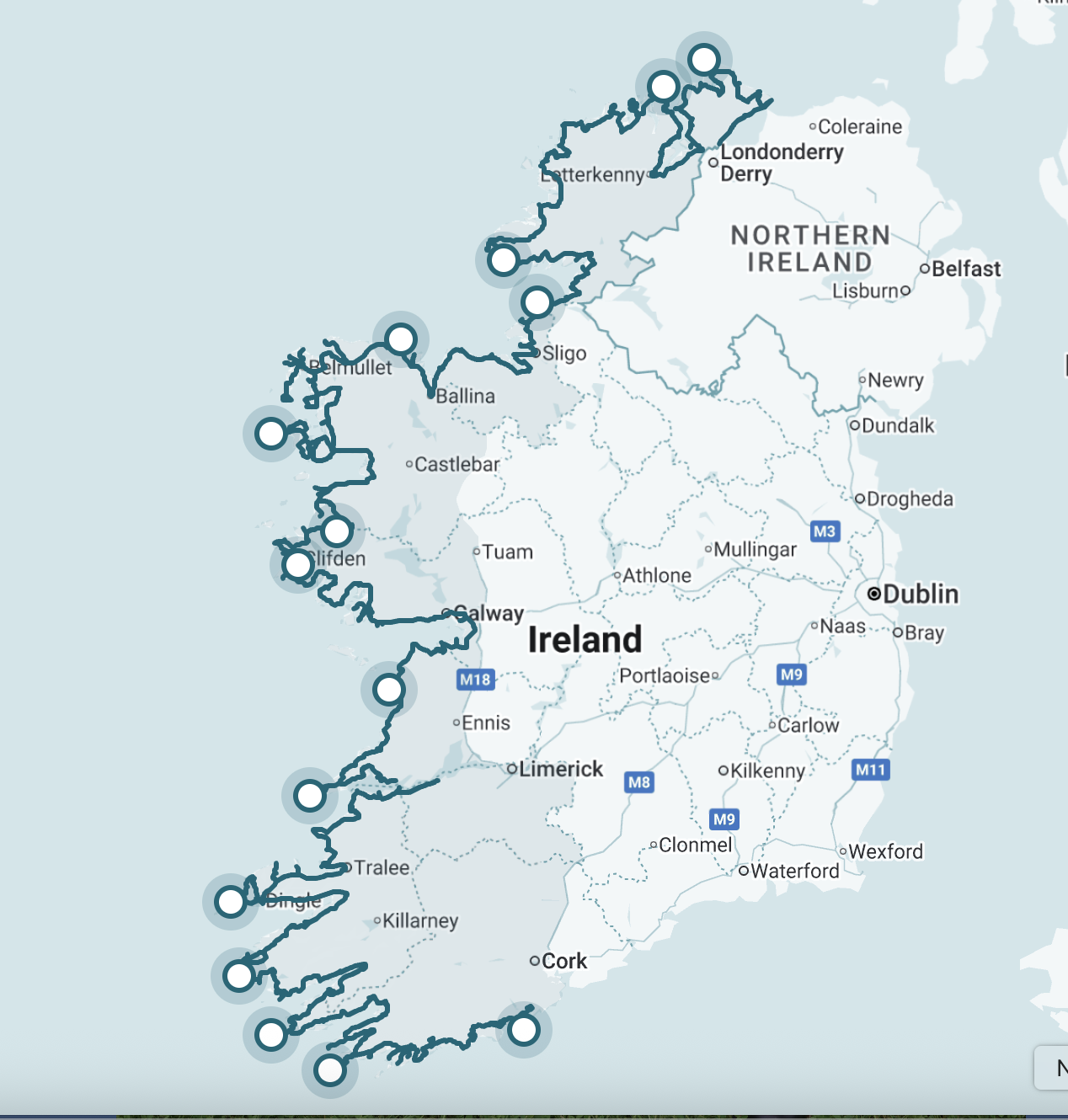
Experience the best of the Wild Atlantic Way
The Wild Atlantic Way is the longest defined coastal touring route in the world,
spanning 2,500 km (1,553 miles) along Ireland’s west coast. The route is known for hits
like the Cliffs of Moher and Ring of Kerry, and other dramatic scenery.Read more about the WILD ATLANTIC WAY.
Hidden Gems along the route.
Northern Peninsulas: (Donegal, Sligo, Mayo)
☘️ Inishowen Peninsula (Donegal), Ireland’s northernmost point, known as the "End of the Road."
—Malin Head (filming location for Star Wars), Beautiful "Inishowen 100" scenic drive.
—-Slieve League Peninsula (Donegal), known for the Slieve Cliffs (video), the highest accessible sea cliffs in Europe.☘️ Mullaghmore Peninsula
—visit Mullaghmore Head, located between Cliffoney and Grange.
—The Beach, walk along the stunning white sandy beach.☘️ Mullet Peninsula (Mayo), quiet, wild, less crowded.
—Erris Head, Irish-speaking Gaeltacht area.☘️ Connemara (Galway): Romantic, wild. A coastal maze of bays and islands.
—Sky Road near Clifden for amazing sea views.
Southern Peninsulas(Kerry & Cork),
☘️ Dingle Peninsula (Kerry): cultural and artistic, famous for music, food, and Dingle town.
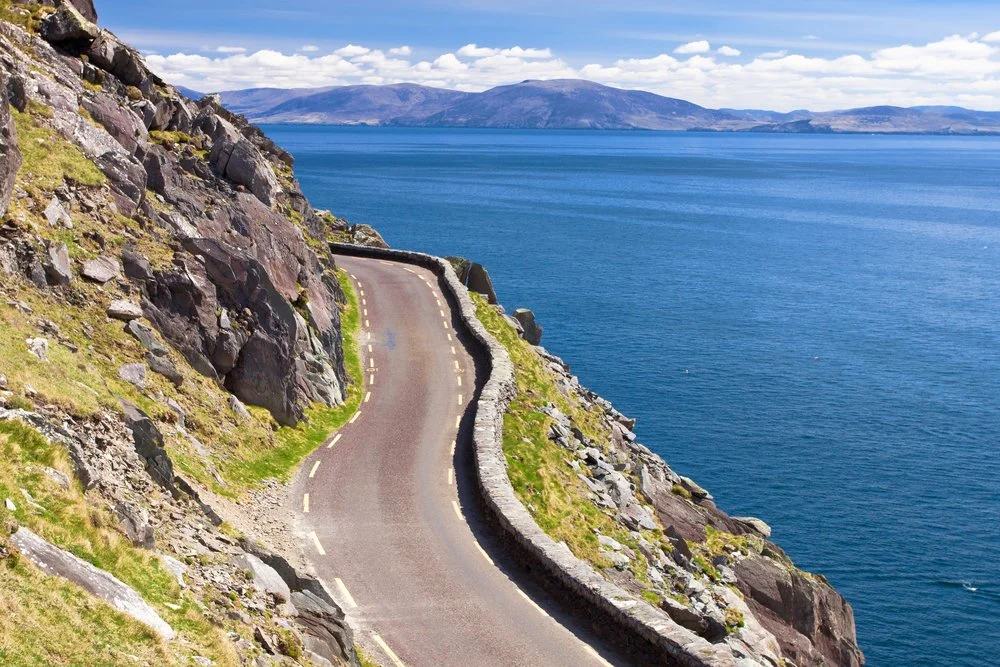
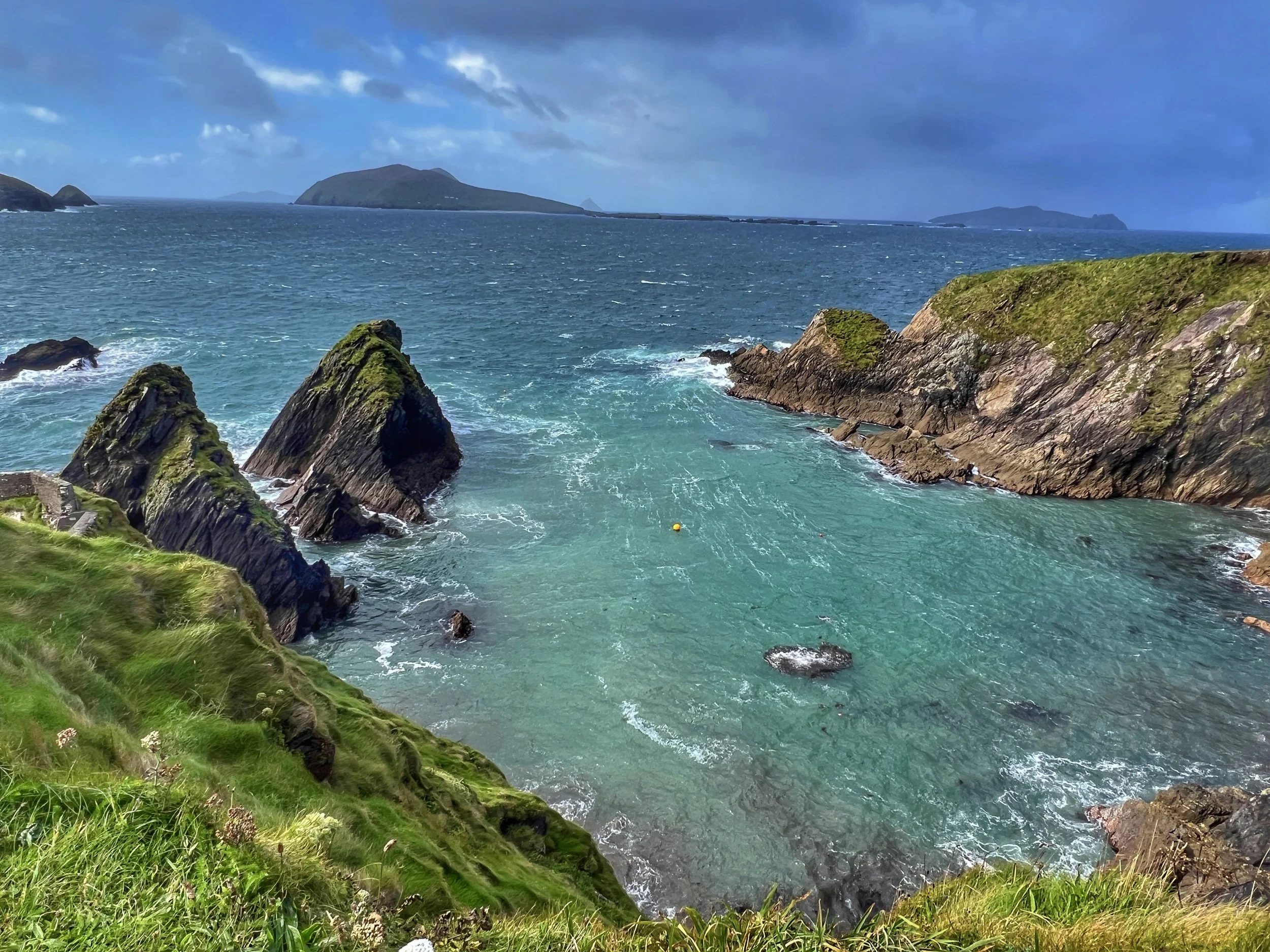
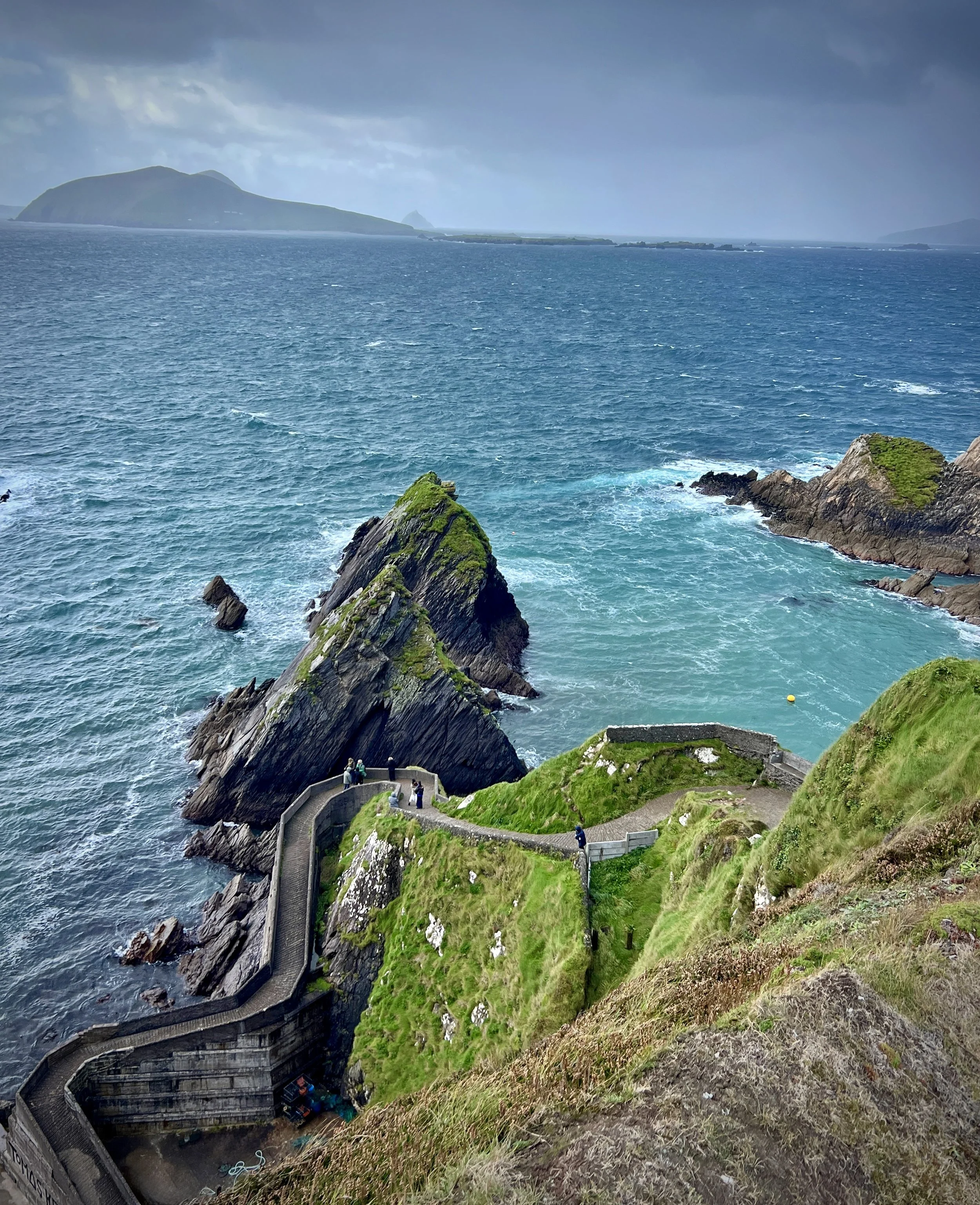
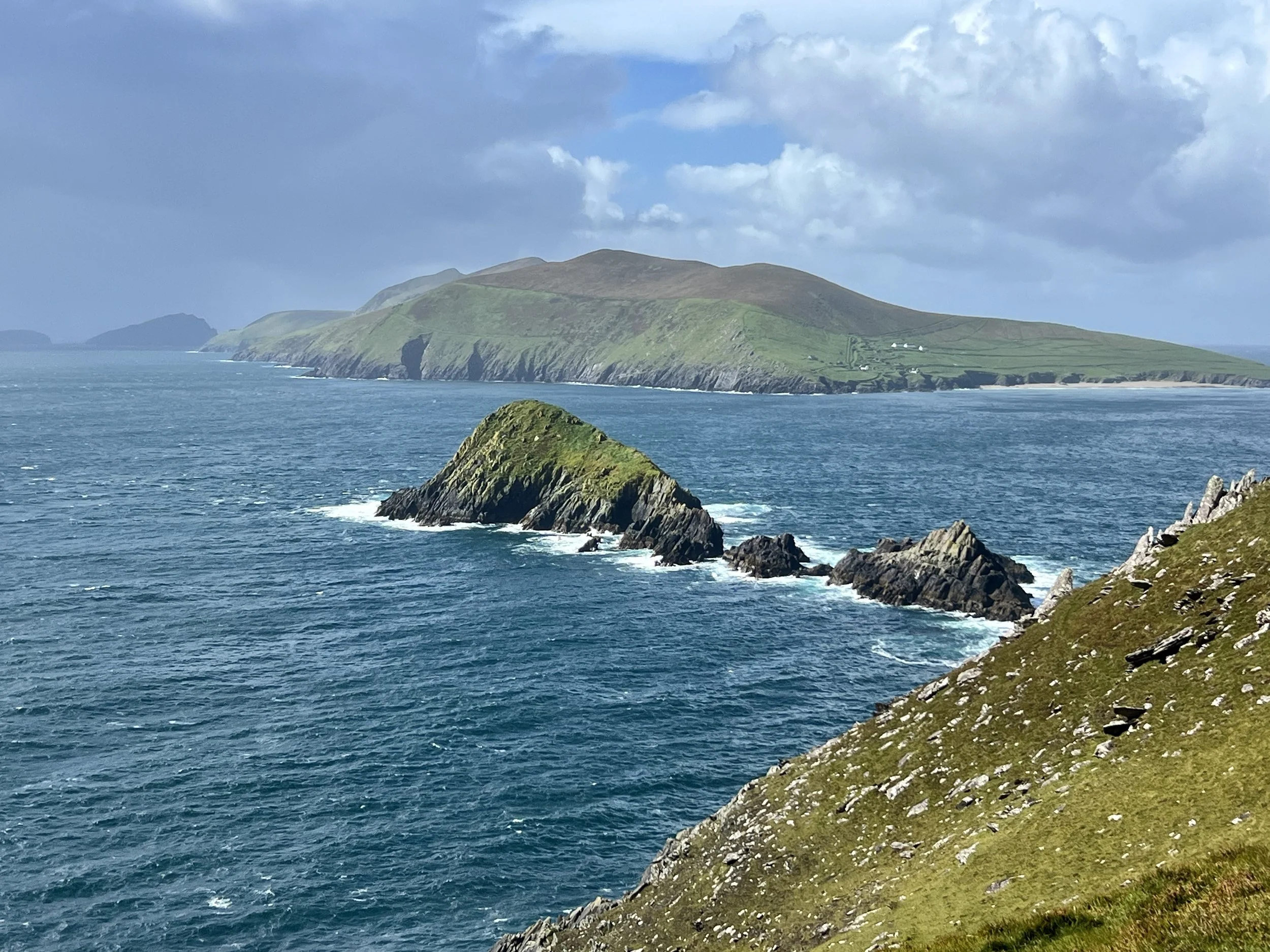
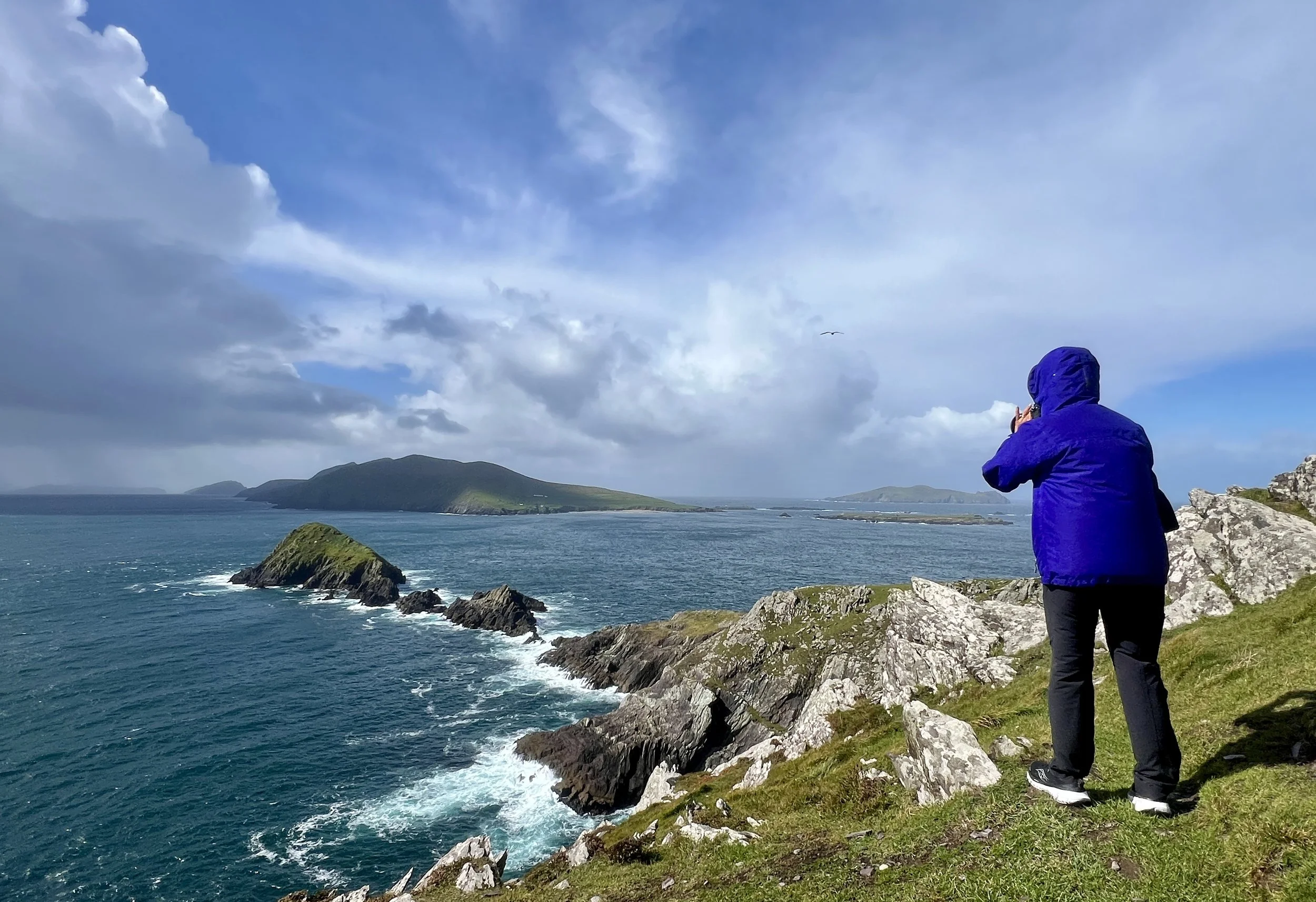
—Slea Head Drive—cliff road with great views of the Blasket Islands.☘️ Iveragh Peninsula (Kerry): known for the Ring of Kerry.
—Skellig Ring—a side route with cliffs and views of Skellig Michael.
-
This list ranks places from "Best" to "OK" by hiking excitement, photo chances, and trail quality. All are great; the top ones have dramatic mountains and coastlines, while the lower ones are still pretty but offer easier, shorter walks.
1. Dingle Peninsula (Kerry)
The Ultimate Hiking Destination. This peninsula offers the perfect marriage of sharp mountain ridges and dramatic coastline. It feels like all of Ireland's best scenery compressed into one finger of land.
Best Trail: Mount Brandon.
The Hike: A strenuous but rewarding climb up Ireland’s second-highest mountain. The "Saint’s Route" from the west is scenic and historic.
Why it's #1: On a clear day, the views from the summit are arguably the best in Ireland, stretching from the Blasket Islands to the MacGillycuddy Reeks. The ridge looks like the spine of a dragon dropping into the sea.
Photographic Highlight: The view looking down the ridge toward the jagged coast and the Blasket Islands.
2. Slieve League Peninsula (Donegal)
Most Dramatic Scenery. While Dingle has variety, Slieve League has pure, terrifying scale. These are the highest accessible sea cliffs in Europe, nearly three times higher than the Cliffs of Moher.
Best Trail: The Pilgrim’s Path (to One Man's Pass).
The Hike: A hike from Teelin up the back of the cliffs. It leads to the terrifyingly narrow "One Man's Pass" (only for experienced hikers), but you can stop before the pass for safe, incredible views.
Why it's #2: The sheer scale of the 600m drop into the Atlantic is unmatched. It feels wilder and less commercialized than other major sites.
Photographic Highlight: The "Giant’s Desk and Chair" rock formations and the sheer drop of the cliffs against the dark blue Atlantic.
3. Iveragh Peninsula (Ring of Kerry)
Most Epic Scale. Home to Ireland's highest mountains (the MacGillycuddy Reeks), this peninsula offers "big mountain" energy that the others lack.
Best Trail: Carrauntoohil (via Devil’s Ladder) OR Bolus Barracks Loop.
The Hike: Carrauntoohil is a serious mountain climb for experienced hikers. For a pure coastal scenic hike, choose the Bolus Barracks Loop near the Skellig Ring—it offers direct views of Skellig Michael.
Why it's #3: The landscape is vast and powerful. The combination of black mountain lakes and green valleys is stunning.
Photographic Highlight: The view of Skellig Michael (the "Star Wars island") rising like a pyramid from the ocean.
4. Connemara (Galway)
Most Unique Landscape. Connemara looks different from the rest of Ireland—a russet-colored wilderness of bogs, quartzite mountains, and shimmering lakes.
Best Trail: Diamond Hill (Upper Loop).
The Hike: Located in Connemara National Park, this is a very accessible, well-maintained trail with stone steps leading to a sharp peak.
Why it's #4: The payoff-to-effort ratio is incredible. You get 360-degree views of the Twelve Bens mountains and the jagged coastline for a moderate 2-3 hour hike.
Photographic Highlight: The view from the summit looking down at Kylemore Abbey and the intricate maze of bays and islands.
5. Mullet Peninsula (Mayo)
Best "Hidden Gem" & Wildest Coast. Far off the tourist trail, this area feels deserted and raw. If you want solitude and crashing waves, this is the place.
Best Trail: Erris Head Loop.
The Hike: A 5km loop along grassy cliff tops. It is relatively easy but spectacular.
Why it's #5: It lacks the towering mountains of Kerry or Donegal, but the coastal scenery is pristine. You are walking on the very edge of Europe.
Photographic Highlight: The dramatic sea arches and the look-out post from WWII. It is also a great place to spot dolphins.
6. Inishowen Peninsula (Donegal)
Best Rugged Northern Beauty. This peninsula is huge and feels like a separate country. It is rugged, windy, and historic.
Best Trail: Inishowen Head Loop.
The Hike: An 8km trail starting near the lighthouse at Stroove. It takes you into the boggy hills with views across to Scotland on a clear day.
Why it's #6: While Malin Head (Star Wars location) is a "must see," it is more of a viewpoint than a long hike. The Inishowen Head Loop is excellent, but the scenery is slightly less dramatic than the vertical walls of Slieve League.
Photographic Highlight: "Hell’s Hole" at Malin Head—a deep cavern where the tide roars in.
7. Mullaghmore Peninsula (Sligo)
Best "Single Photo" Spot. Placed last only because it is the smallest of the "peninsulas" and the walking is physically the easiest/least "hiking-focused."
Best Trail: Mullaghmore Head Loop.
The Hike: This is mostly a walk along the coastal road rather than a wild trail, though there are grassy paths near the cliffs. It is an easy 5km stroll.
Why it's #7: As a hike, it is less adventurous than the others. However, visually, it is world-class.
Photographic Highlight: This is the site of Ireland’s most famous photo: the fairy-tale Classibawn Castle in the foreground with the flat-topped Benbulben mountain rising ominously behind it.
Summary of the "Best" Order
Dingle: Best mix of Mountains & Ocean.
Slieve League: Best dramatic Cliffs.
Iveragh: Best big Mountains.
Connemara: Best unique Colors & Landscapes.
Mullet: Best Wild/Remote Coast.
Inishowen: Best Rugged/Northern feel.
Mullaghmore: Best singular Photo Op (Castle/Mountain), but simplest walk.
DAY 1
Arrive at Dublin airport (flights usually arrive in the morning). Transfer to your Dublin hotel or if time allows, drive to Kilkenny.
After a two-hour drive from Dublin, you’ll reach Kilkenny in the afternoon. Rest or take
an easy walk around town. Finish with a good dinner and a restful sleep.Overnight: Dublin (late arrivals) or Kilkenny (2 nights)
Driving time: Dublin —> Kilkenny
DAY 2
If you arrived in Kilkenny yesterday, spend today exploring it. Once Ireland’s medieval capital, it’s now famous for lively pubs, music, festivals (comedy, arts, food), and Irish crafts.
Don’t miss Kilkenny Castle. The town also held Ireland’s first recorded witch trial, part of its darker history.
Explore the Medieval Mile. It’s a walking path between Kilkenny Castle in the south and St. Canice’s Cathedral in the north. [MAP]
Kilkenny city guide and map. Download or pick up at Kilkenny Tourist Information Centre, 79 High Street, Kilkenny. [location]
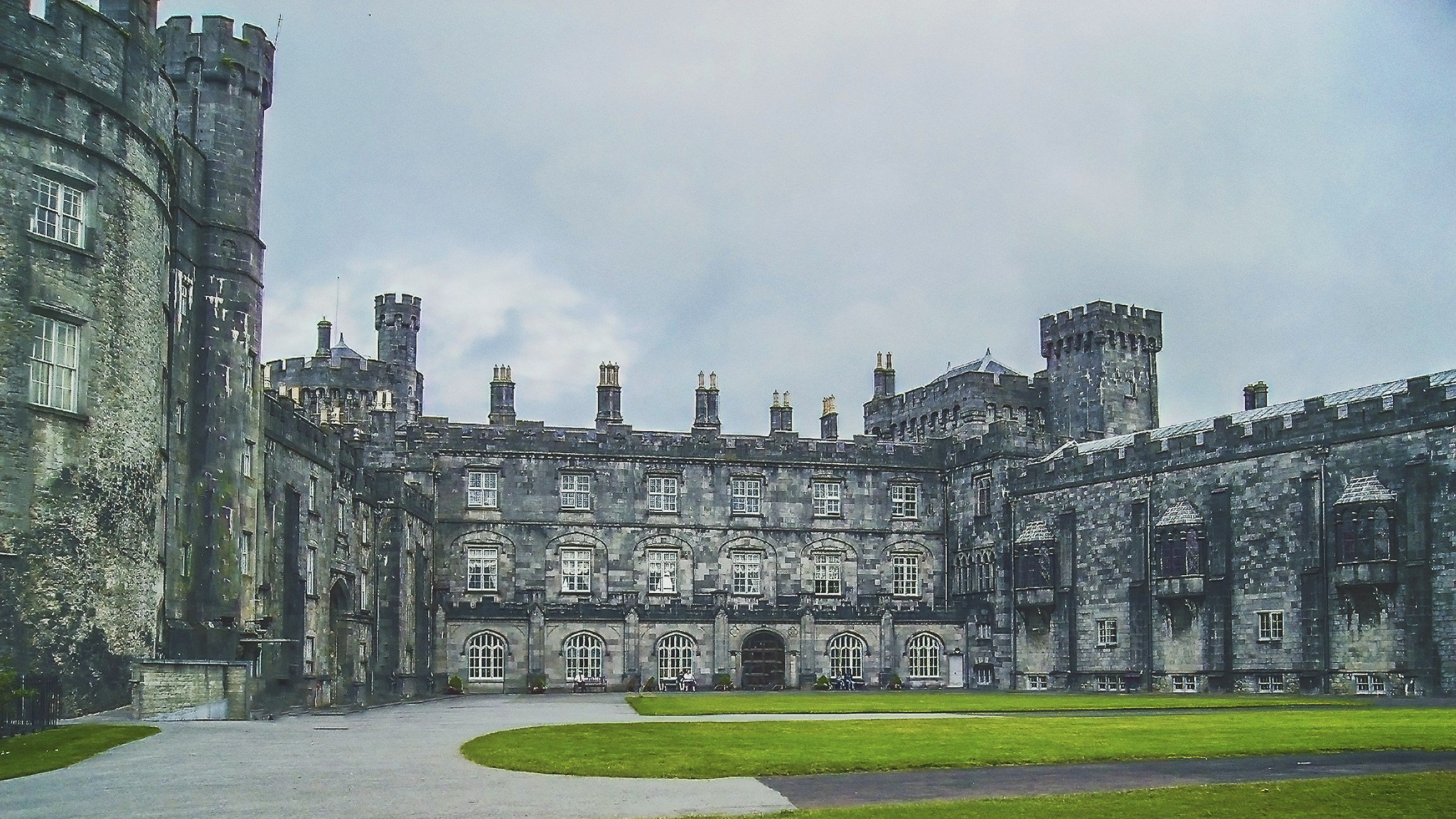
Kilkenny Castle & Parklands - Explore this 12th-century Norman castle at the heart of the city. Take a self-guided tour of the restored rooms, including the Long Gallery, and scan QR codes for information. Guided tours offer history and closer views of some decorations.
Tip: Walk the free, extensive parklands and rose garden before or after the tour.
Afterward, visit the Medieval Mile Museum. Walk north from the castle along The Parade to St. Mary’s Church, now a museum.
It connects the city's past with hands-on exhibits and highlights its medieval beginnings. It holds some of Ireland’s finest medieval sculptures and one of the largest collections of Renaissance tombs in the country.The Butter Slip: With its arched entrance and stone steps, the “Butter Slip” is a narrow,
dark passage linking High Street and St. Kieran’s Street (formerly Low Lane). Built in 1616,
it’s the most picturesque of Kilkenny’s medieval alleys and once housed butter sellers..
Live Music:
Music and Kilkenny fit together, so you'll always find live music in its pubs.
No matter what day of the week it is, Lanigan’s Bar will always offer live music every day.
Whether you like a DJ or traditional Irish music, you’ll find both at Matt the Miller’s
and Rafter’s Gastropub, which regularly hosts local musicians so you can pair pub grub
with Kilkenny sounds.Craft Beer:
Kilkenny’s craft beer scene is great for finding new favorite beers and enjoying good food. Brewery Corner and Sullivan’s Taproom
are known for their wide selection of craft beers with a particular focus on Irish brewers.Ballykeefe Distillery:
Ballykeefe Distillery is a small family-run Irish whiskey distillery on a farm, 15 minutes from the medieval city of Kilkenny.
A tour is highly recommended for anyone interested in Kilkenny’s whiskey history.Overnight: Kilkenny.
Driving time: Dublin —> Kilkenny, 2 hr.

ENLARGE
DAY 3
Explore the Killarney region:
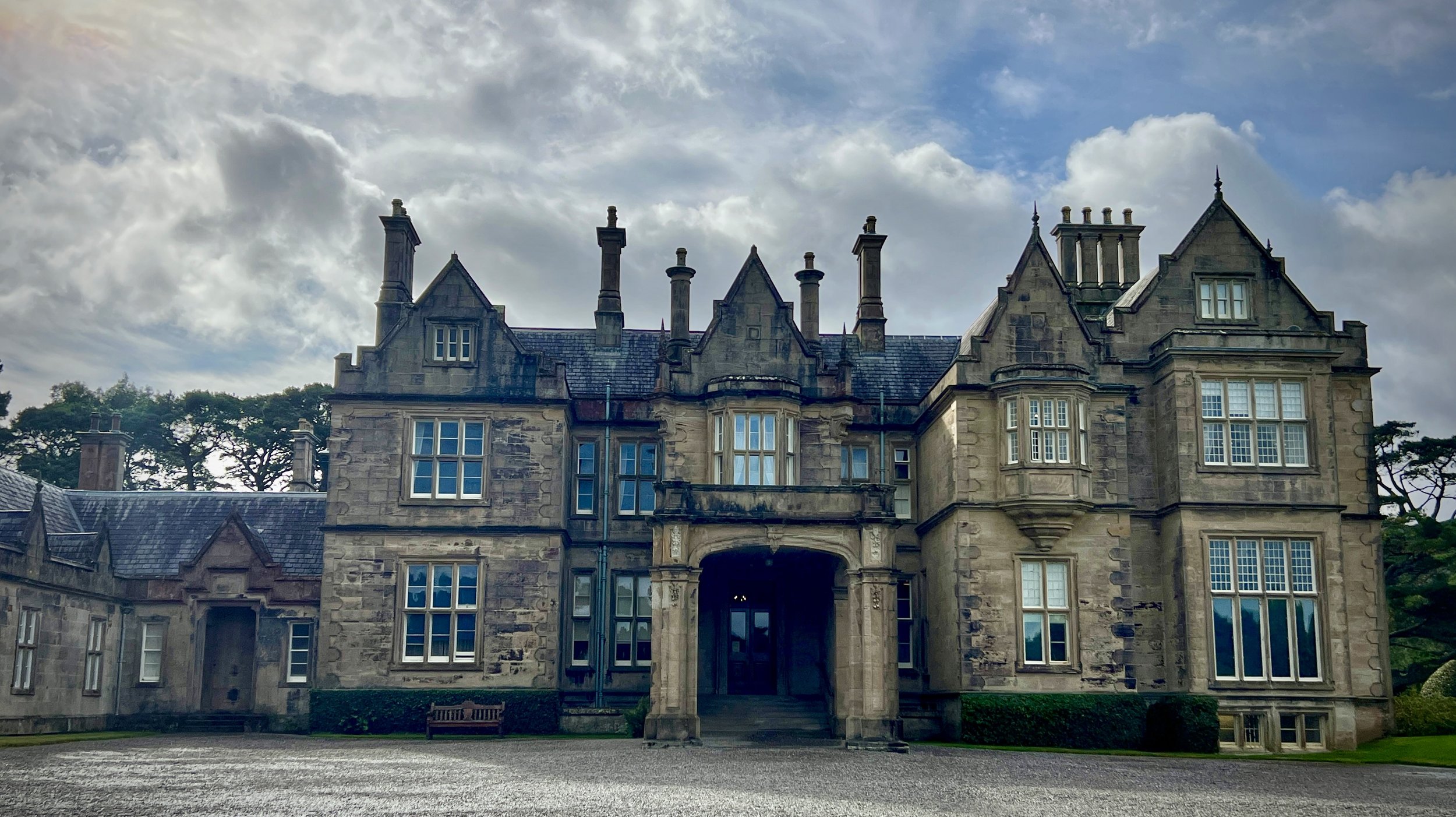
Things to do: Visit Ross Castle and Muckross House, and wander through the beautiful gardens and woodland paths.
Best pubs in Killarney: Start at J.M. Reidy’s, a cozy pub.
Then go to Tatler Jack for live music and sports.
If possible, have lunch and enjoy the view at O’Connor’s Bar in
Cloghane, reached by Conor Pass.Shopping: Killarney offers a fantastic mix of traditional Irish
craftsmanship, high-end knitwear, and modern retail.
Overnight: Killarney (3 nights) [Where to stay]
Driving time: Kilkenny —> Killarney, 3.5 hrs.
DAYS 4 and 5
Killarney is a great base for exploring two (2) of Ireland’s best coastal drives: the Ring of Kerry and the Dingle Peninsula.
⚠️ Both are full-day trips; each needs about a 2-hour drive each way to reach the main sights.
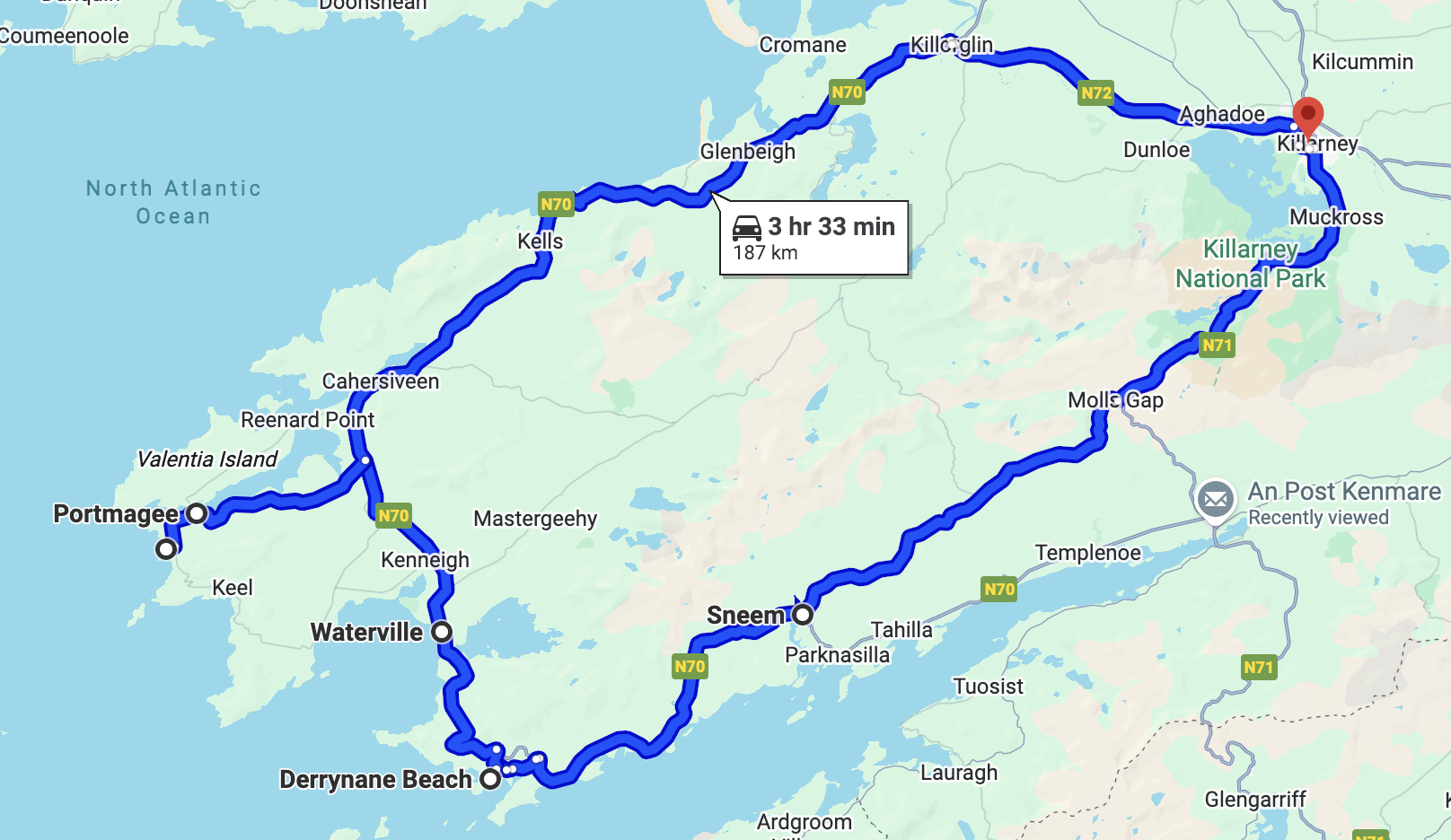
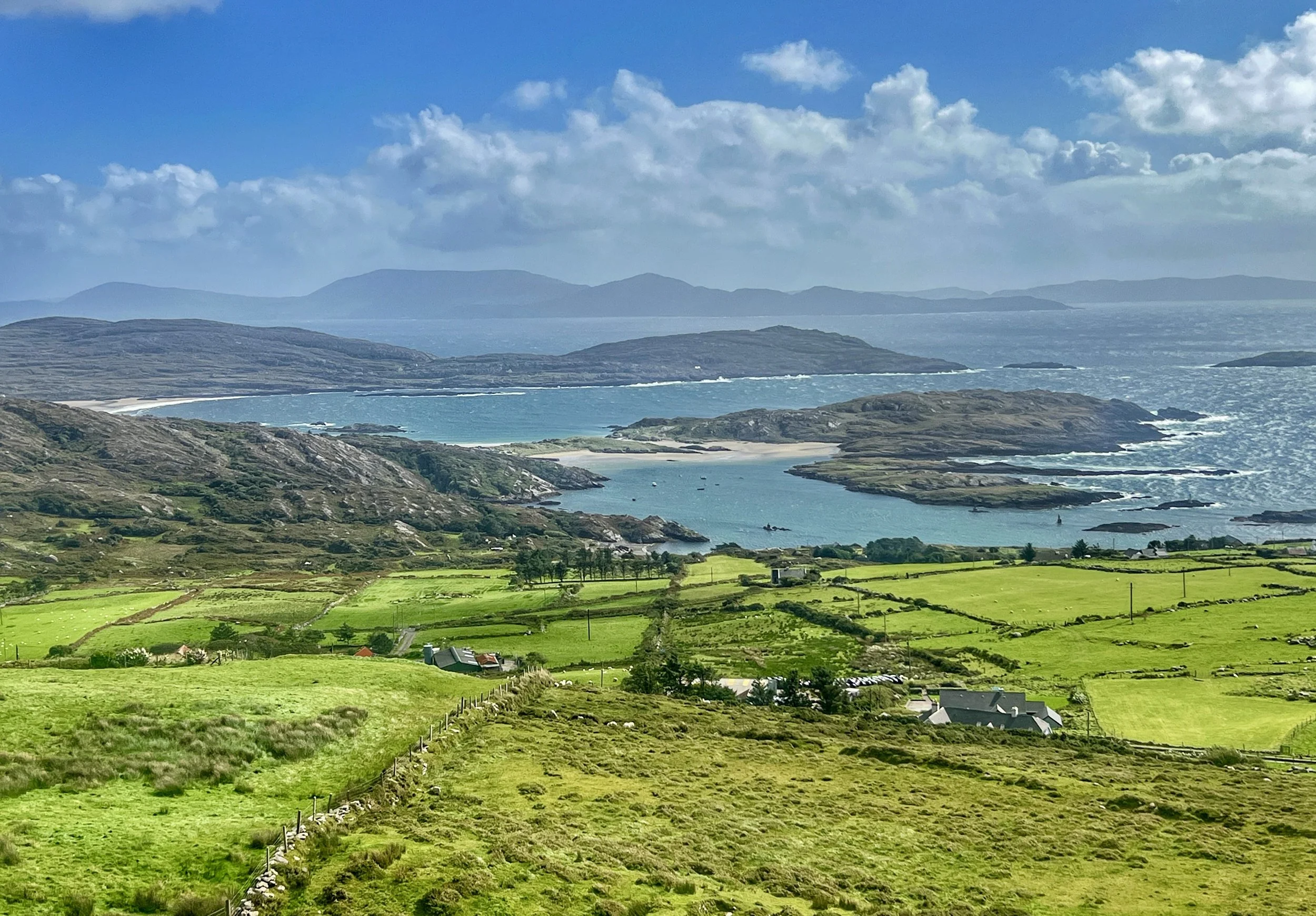
The Ring of Kerry—the scenic loop (N70) crosses a varied terrain of rugged mountains and charming towns.
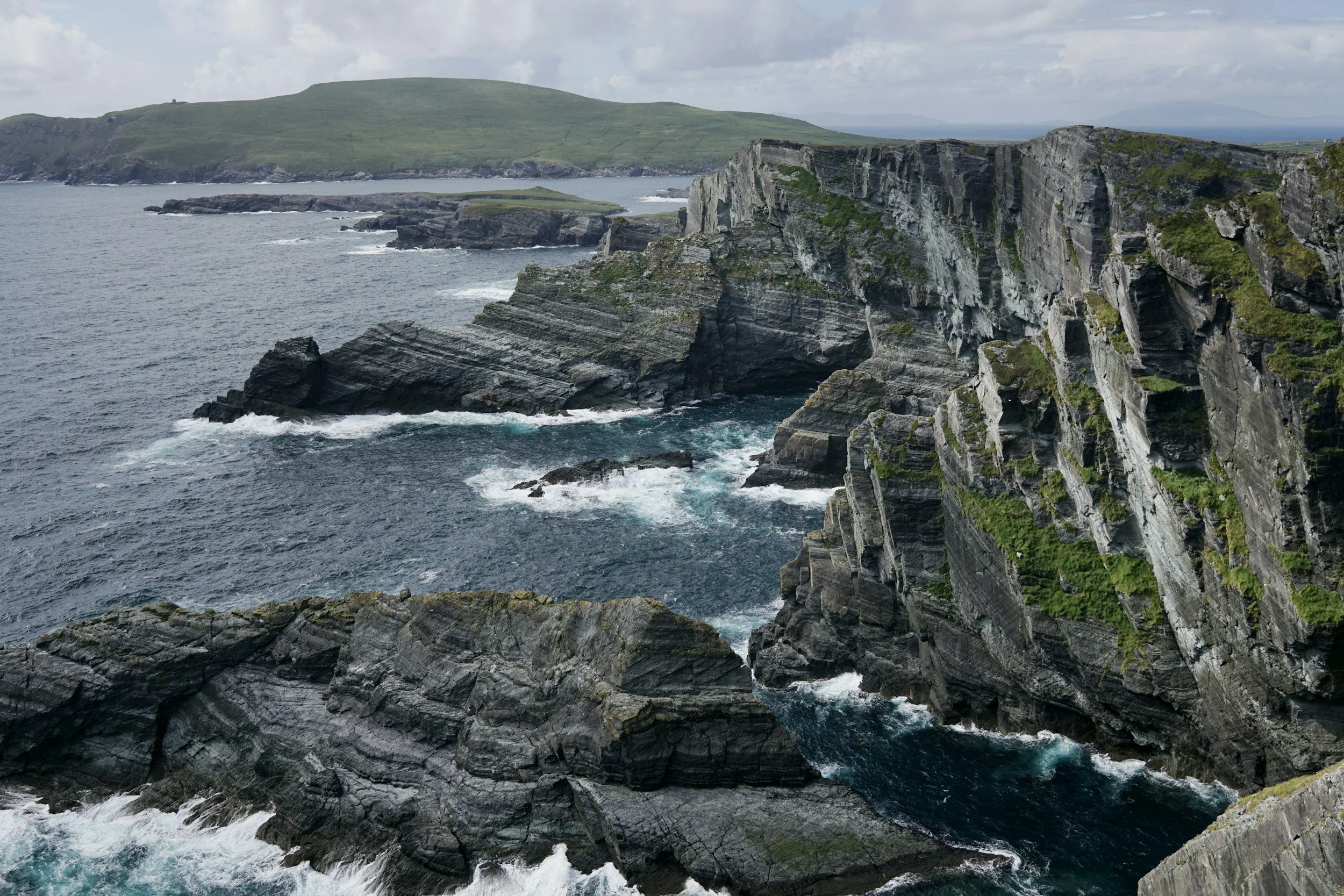
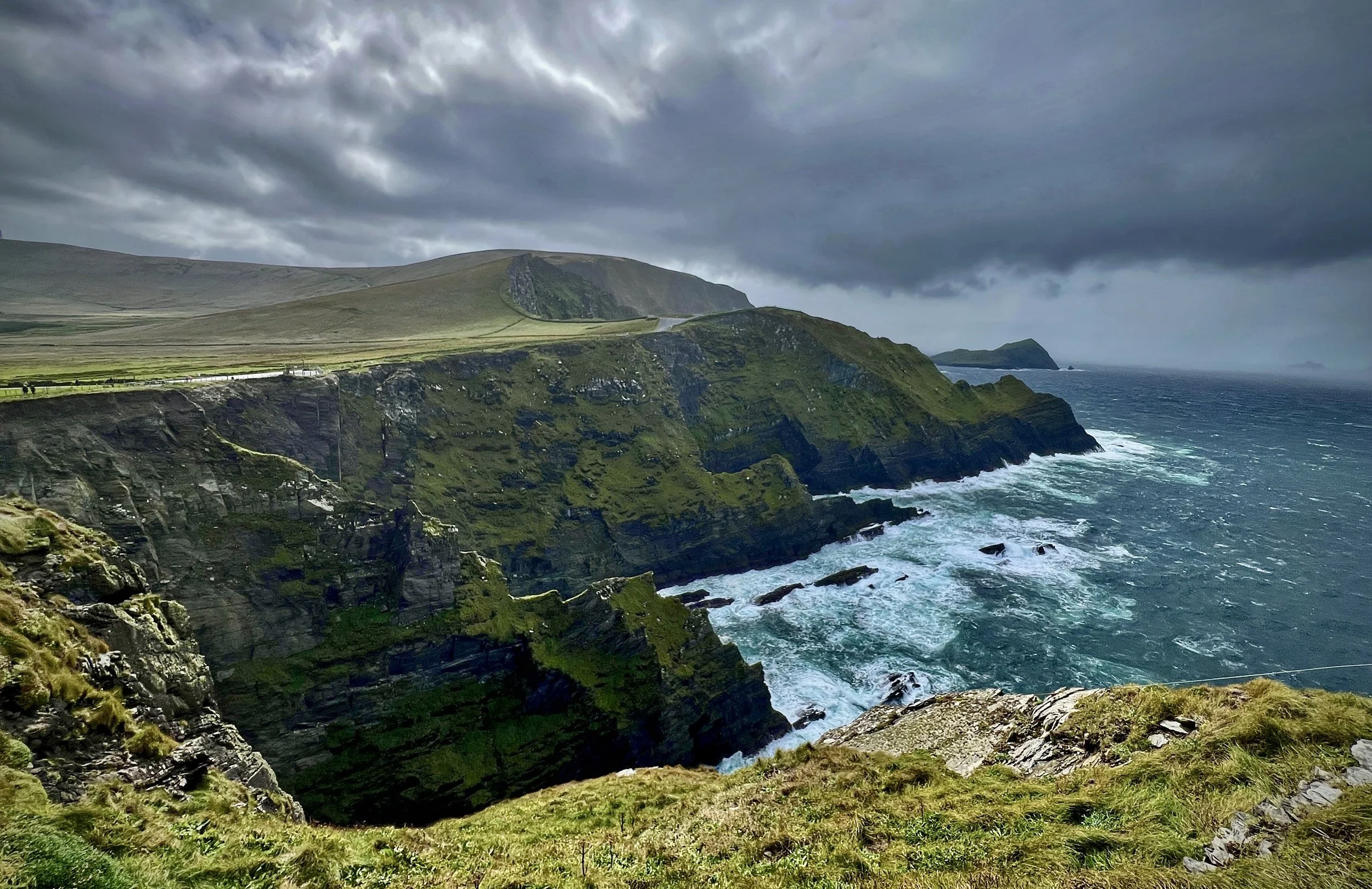
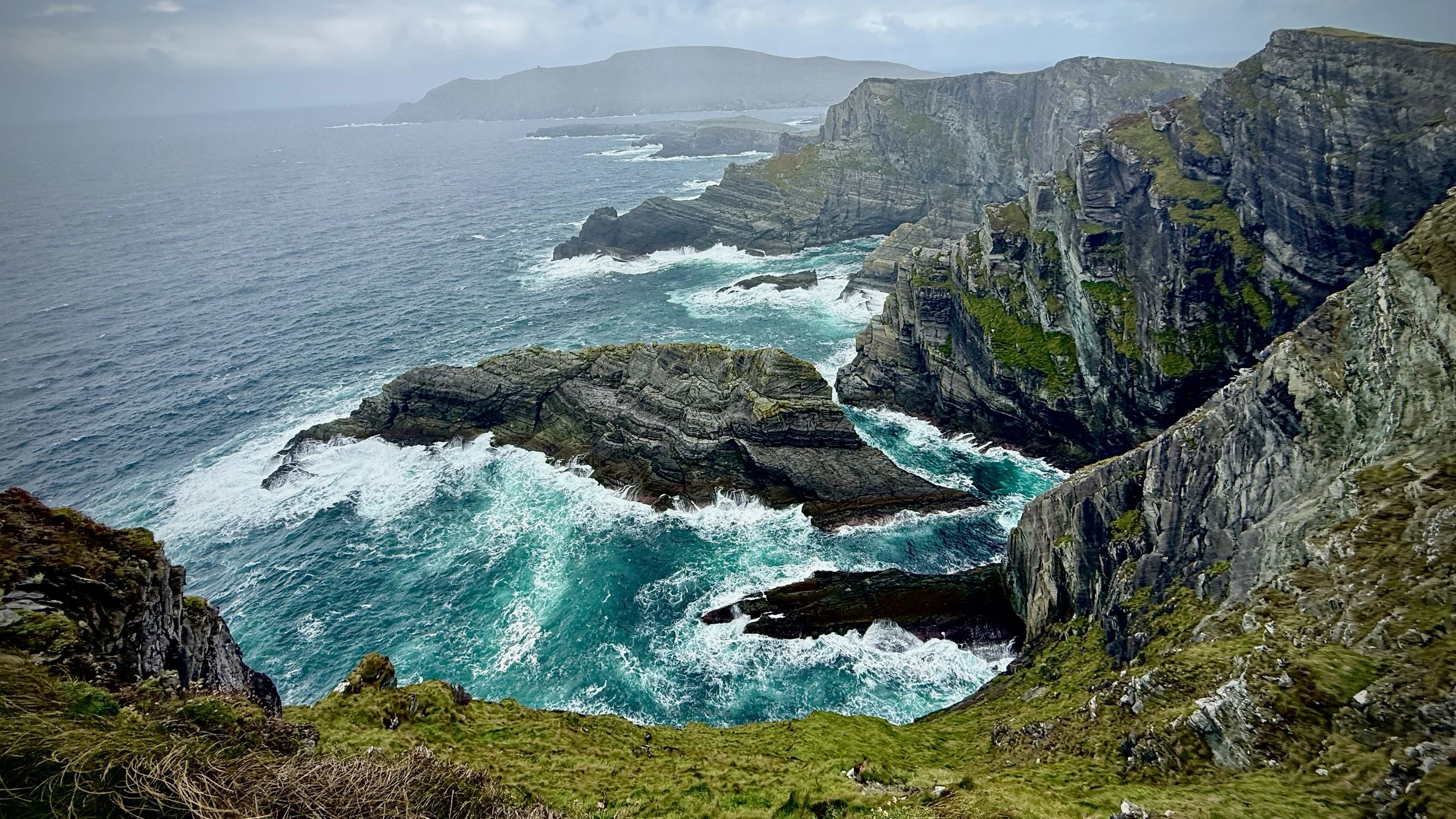
Start early for an 8–10 hour day of adventure. The complete route is 179 km (111 miles).HIGHLY RECOMMENDED: Kerry Cliffs.This is the top attraction on the peninsula. Take a short detour from the Ring of Kerry onto the Skellig Ring to reach the cliffs. They offer stunning, less crowded views than the Cliffs of Moher.
Portmagee: A vibrant fishing village famous for fresh local seafood.
Waterville: A beautiful seaside resort town hugging the coast.
Derrynane Beach: Renowned for its stunning, expansive white sand.
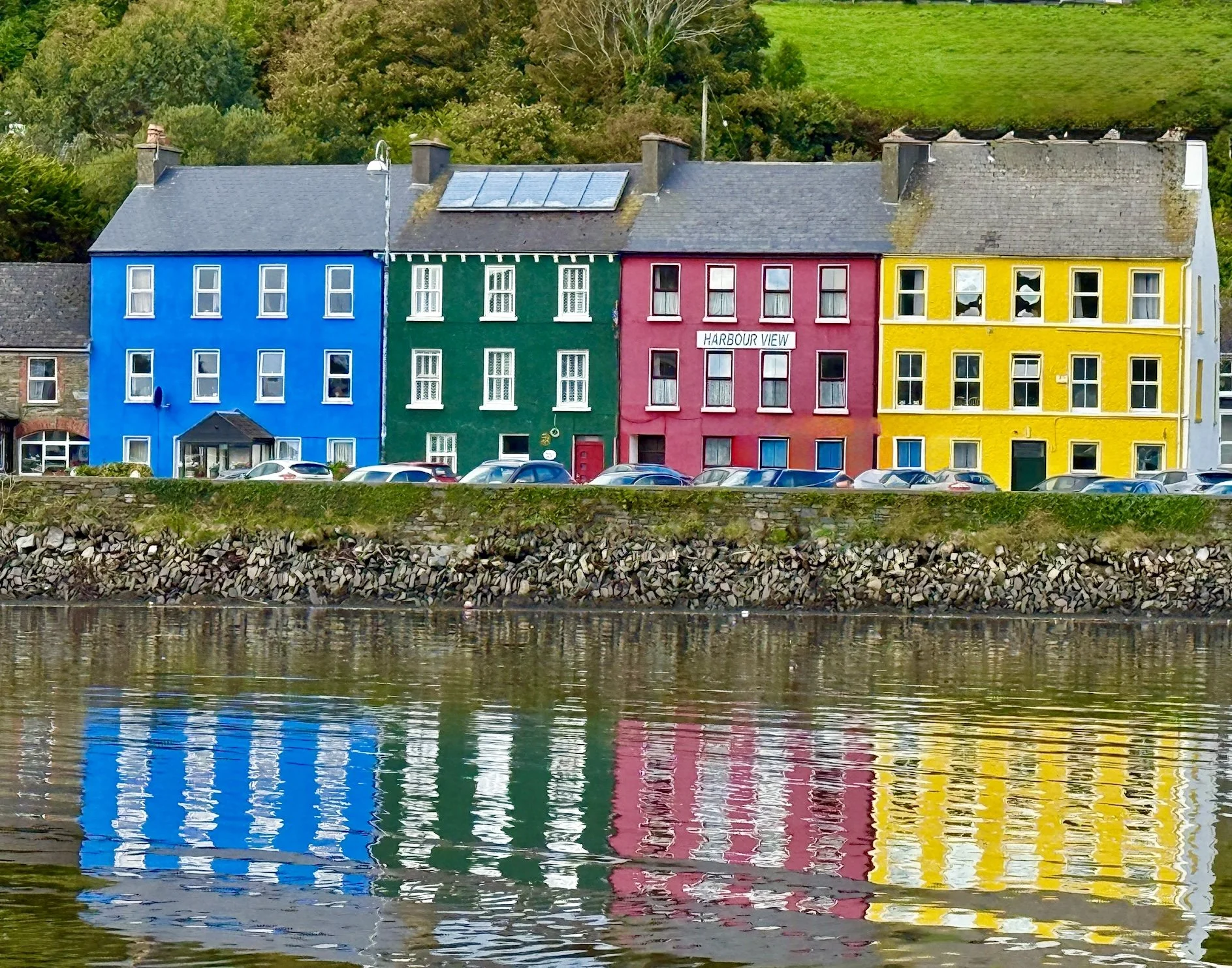
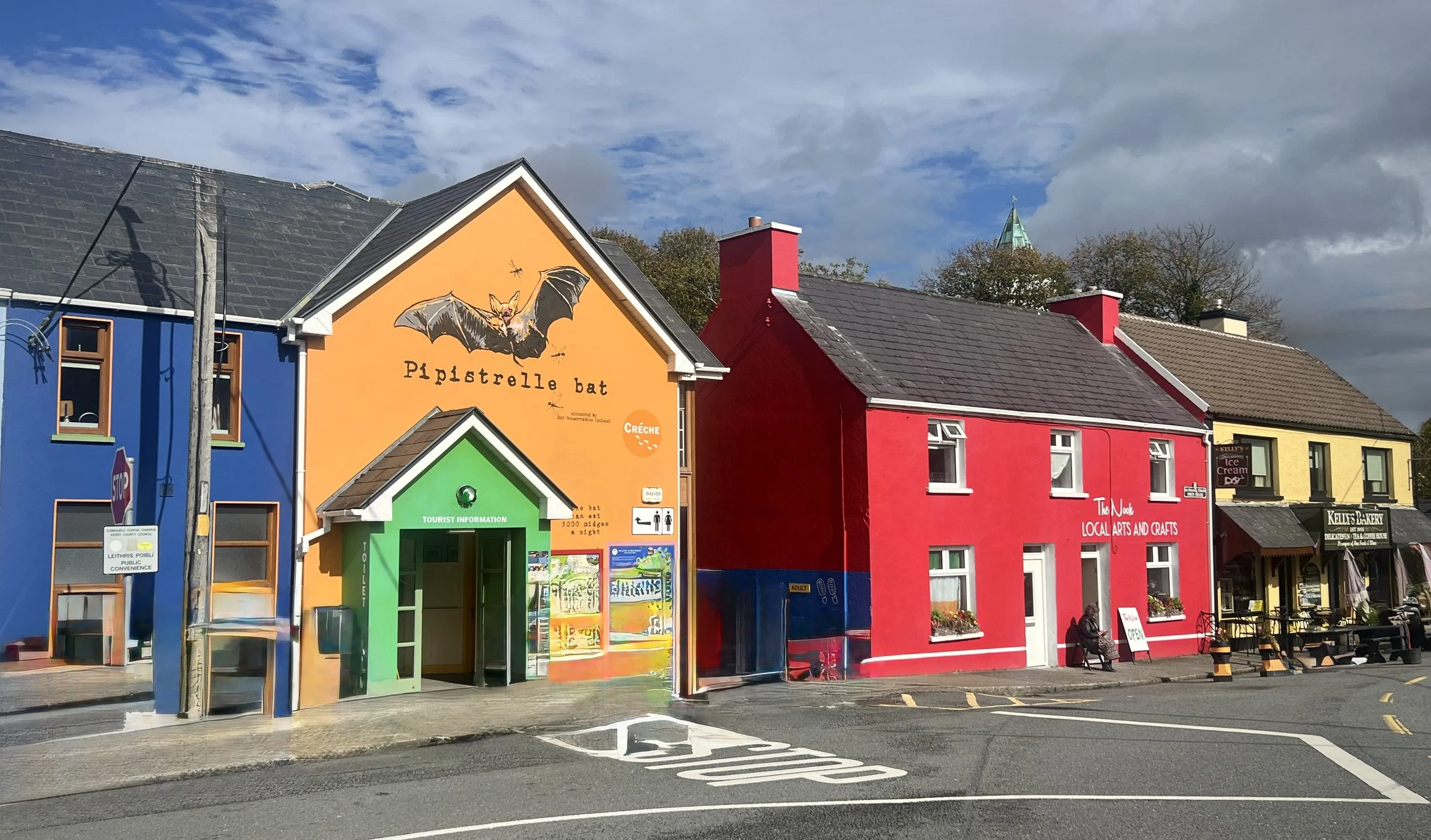
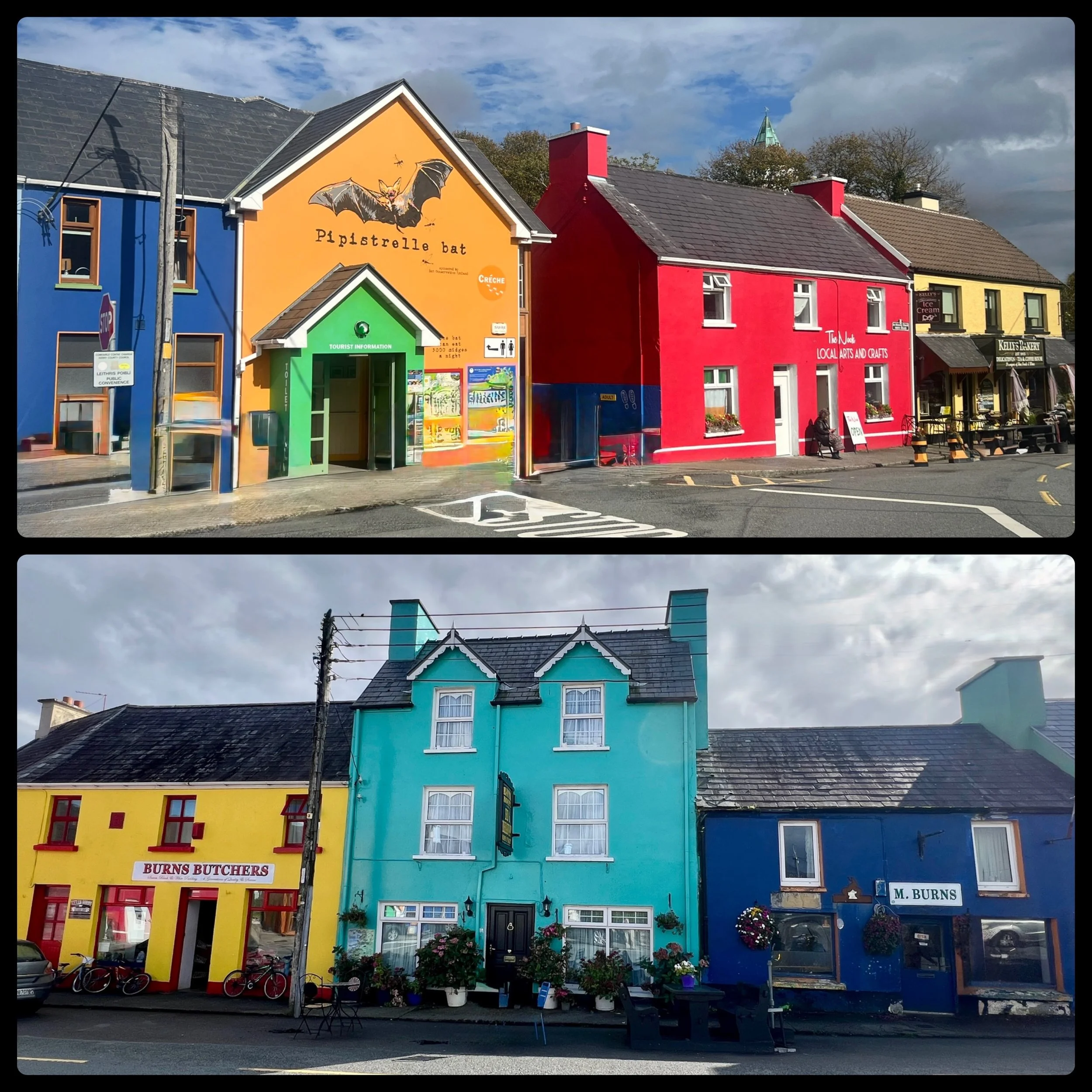
Sneem and Kenmare: Both are exceptionally colorful, picturesque towns worth stopping in for a stroll.
⚠️ The Ring of Kerry is usually driven counter-clockwise, starting from Killarney.
The main stops in sequence are Kerry Cliffs —> Portmagee —> Waterville —> Derrynane Beach —> Sneem —> Kenmare — KillkarneyThe following day, you will head out to tackle the dramatic coastline, beehive huts, and artistic pubs of the rugged Dingle Peninsula.
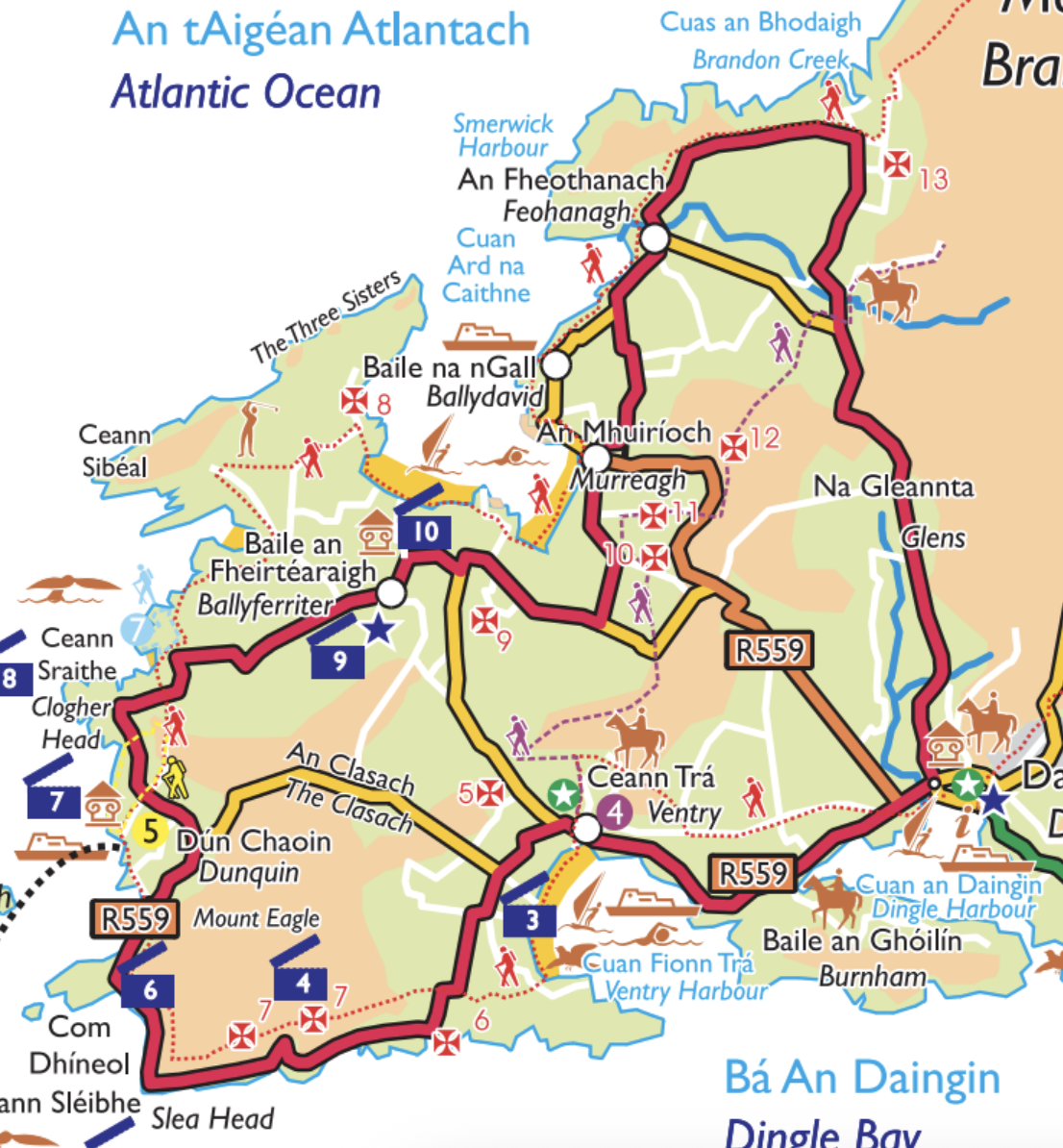
The Dingle Peninsula - a rugged southwest County Kerry coast on the Wild Atlantic Way, known for dramatic sea views, rich history,
the town of Dingle, and Slea Head Drive.Dingle Town: A lively fishing town with colorful buildings, craft shops, fresh seafood, and busy pubs playing traditional Irish music.
Unique Pubs: Visit famous "hardware pubs" like Dick Mack's and Foxy John's.
Dingle Distillery: An artisanal distillery known for its whiskey, gin, and vodka.
Slea Head Drive: This short, clockwise loop around the peninsula's western tip offers some of
Ireland's best coastal views. Key stops include:Fahan Beehive Huts: cone-shaped stone homes used by monks from the 8th to 12th centuries.
Dunmore Head: one of Europe's westernmost spots with amazing coastal views.
Coastal Views & Beaches:
Coumeenoole Beach: a stretch of sand with haunting views of the Blasket Islands. [location]
Dunquin Pier: famous for its winding path to the water, where boats leave for the Blasket Islands.
Inch Beach: a wide, expansive beach (or "strand") perfect for walking, surfing, or kite-surfing. [location]
DAY 6
Your trip starts at sunrise when you leave Killarney. First, drive to the Cliffs of Moher.
Note: This is the longest driving day of the trip.
Visit the Cliffs of Moher and spend 1-2 hours exploring. Walk the paved paths (3.5 km or 2.17 miles) and enjoy views from the main platforms. Then drive north to County Galway. [Walking information]
Afternoon: Connemara's Rugged Beauty. The best part of the drive runs from Galway Bay to wild Connemara, with mountains, bogs, and lakes on the way to the tourist town of Clifden.
🚧 DIVERSION: Hazel Mountain Chocolate! It is a popular bean-to-bar chocolate factory, shop, and cafe in the Burren area.
Overnight: Clifden (2 nights)
Driving time:
DAY 7
Explore the Connemara Peninsula. Here are activities you can consider: [MAP]
Take a breathtaking scenic drive on Sky Road. This short, winding 11 km loop offers
spectacular views of Clifden Bay. The drive starts and ends in Clifden.Visit Kylemore Abbey and the Victorian Walled Garden—the area's best-known landmark—a beautiful, fairytale-like abbey by a lake with mountains behind it. Why it's popular: It has a rich history as a castle and girls' school, plus beautiful buildings.
Hike Diamond Hill (Connemara National Park) - The trail is easy to walk with wooden paths and stone steps.
Entrance to the National Park is free. From the top, you get great views of Connemara National Park, the Atlantic Ocean,
and Kylemore Abbey. The whole walk takes only a few hours.
Best Irish Pubs for Traditional Music, these pubs are known for live Irish music and an authentic Irish vibe.
Lowry's Traditional Irish Music & Whiskey Bar, an iconic Irish pub famed as the "home of Irish music," has won multiple
"Best Traditional Bar in Ireland" awards for its warm atmosphere, live music, and extensive whiskey selection.EJ Kings Bar & Restaurant, in Clifden's square, offers great food and a lively atmosphere with excellent live music
and a "mighty craic."MC McGrath's Bar,one of Clifden's oldest family-run pubs, is known for cozy fireplaces and a lively music atmosphere.
Guy's Bar & Snug, one of the oldest bars in Clifden, this charming gastropub with cozy snugs and open fireplaces.
Overnight: Clifden
Driving time:
Clifden—> Kylemore Abbey
Clifden—> Sky Road
DAY 8
Depart for Galway.
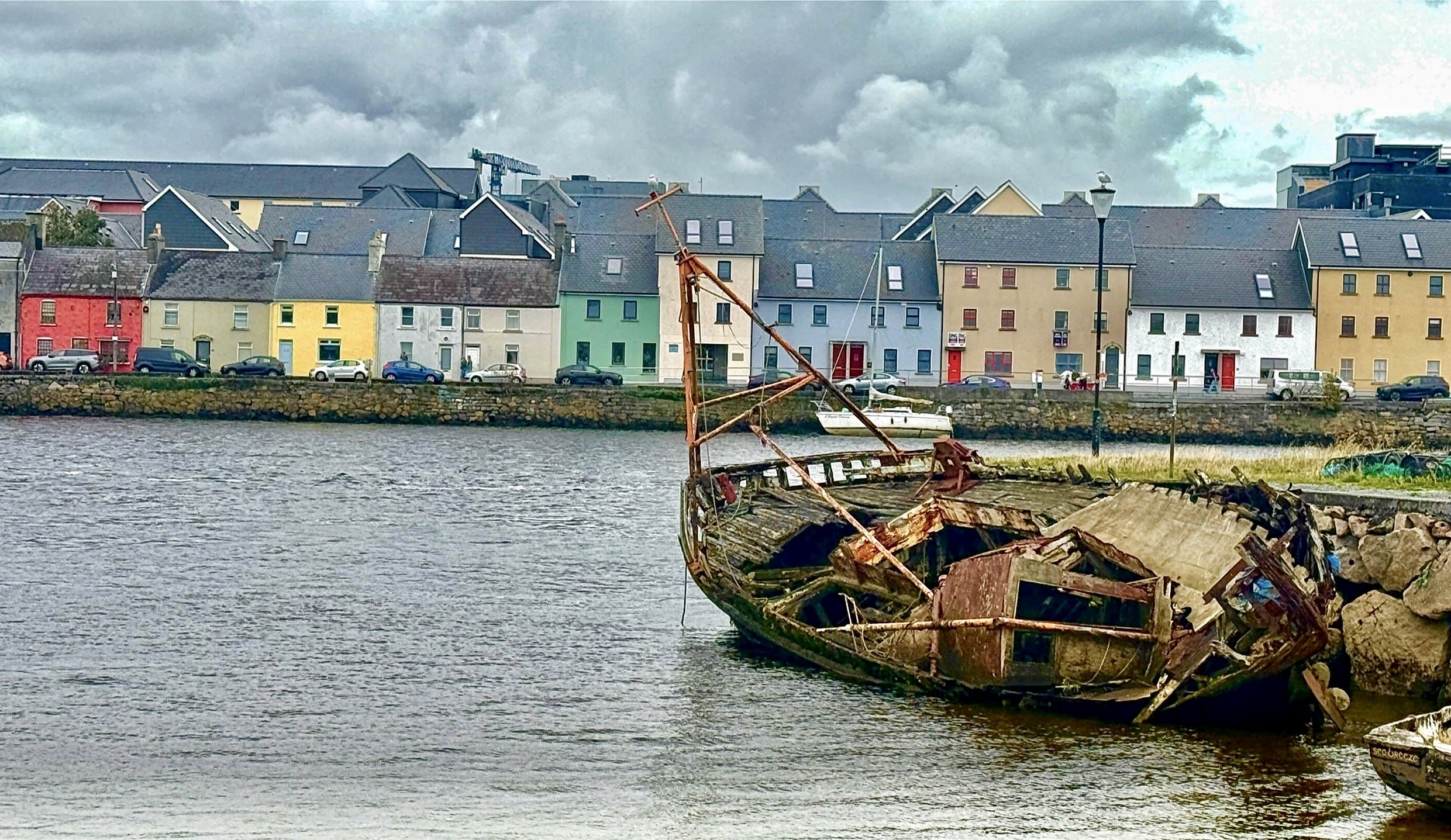
Galway is a vibrant city known for its lively atmosphere (video) and traditional music. [MAP]
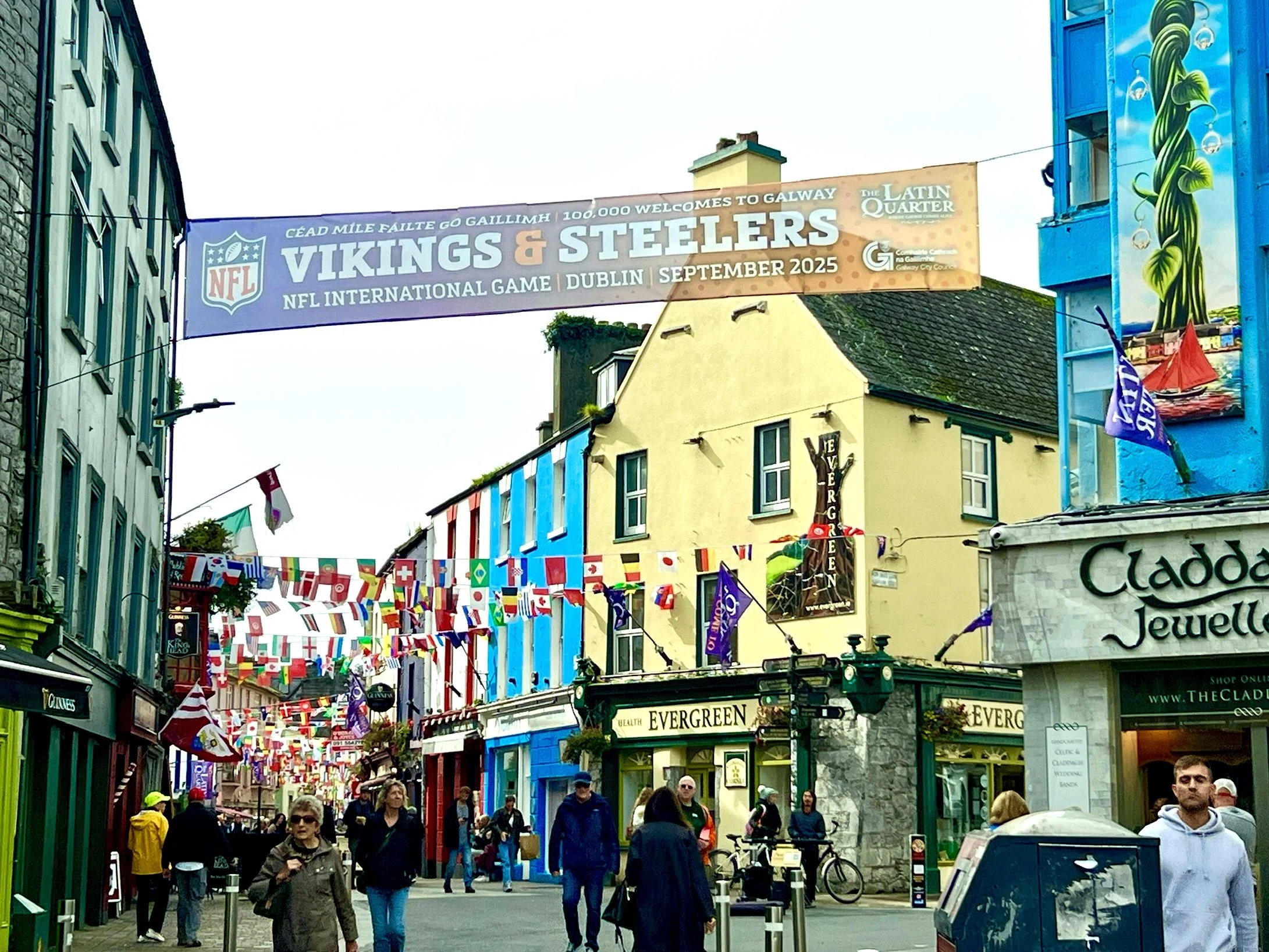
Must see: The Latin Quarter & Quay Street: This is the cultural heart of Galway, with colorful shopfronts, cobblestone streets, and a huge concentration of traditional pubs, boutiques, and restaurants. It's the best place to find live traditional Irish music at pubs like The Crane Bar or Tigh Cóilí.
Overnight: Galway
👍 Staying near the Latin Quarter is the Best Strategy. You will have the ultimate convenience.
Driving time: Clifden —> Galway, 90 minutes
DAY 9 and 10
☘️ Depart for Dublin, a city full of culture, history, and lots of fun.
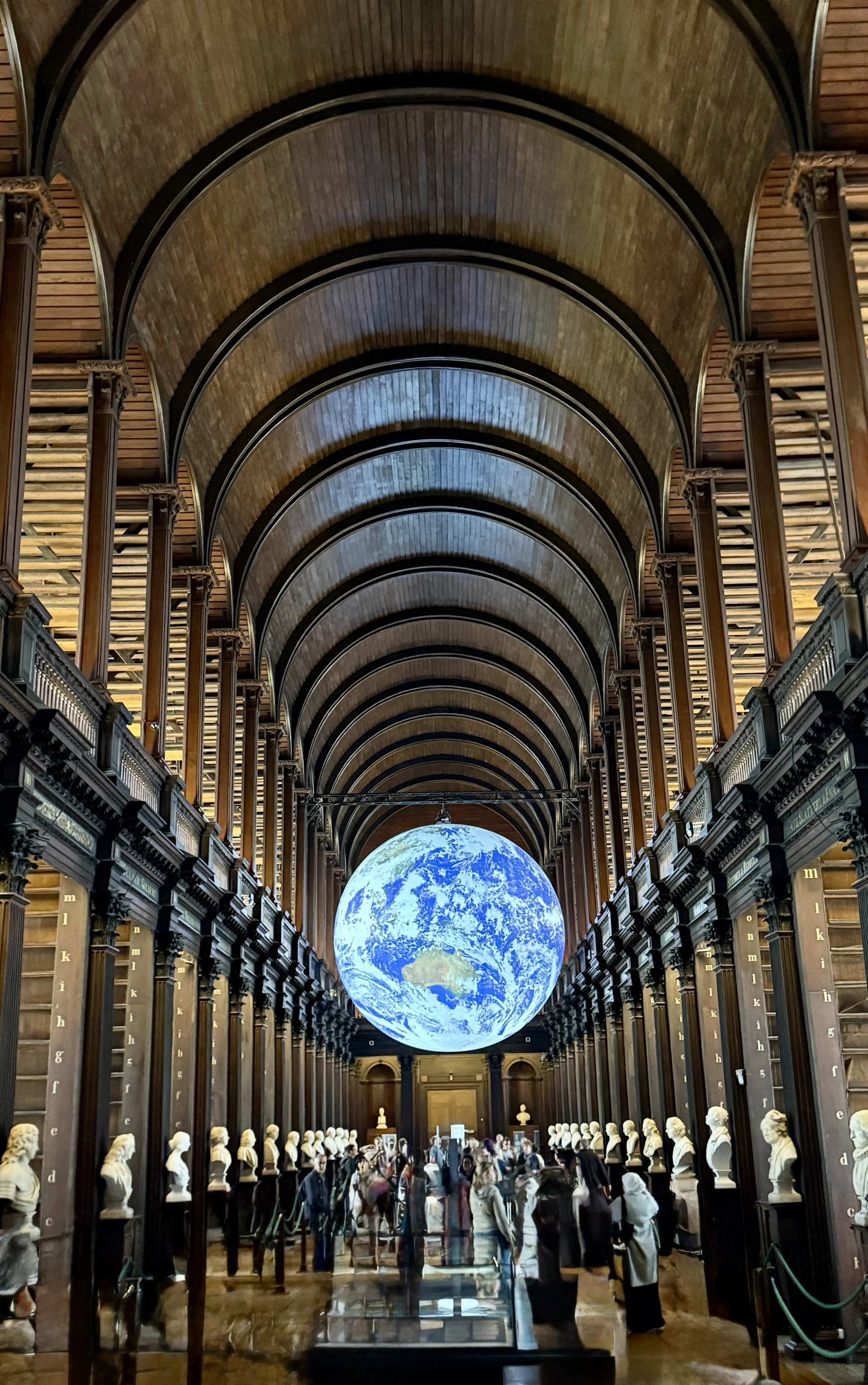
Begin at Trinity College, reserving a timed ticket in advance to see the magnificent Long Room Library & the Book of Kells.
Stroll down the bustling shopping street of Grafton Street, catching the street performers.
Explore Dublin Castle, once the center of British rule. Visit either Christ Church Cathedral (medieval crypt) or St. Patrick’s Cathedral, Ireland’s national cathedral.
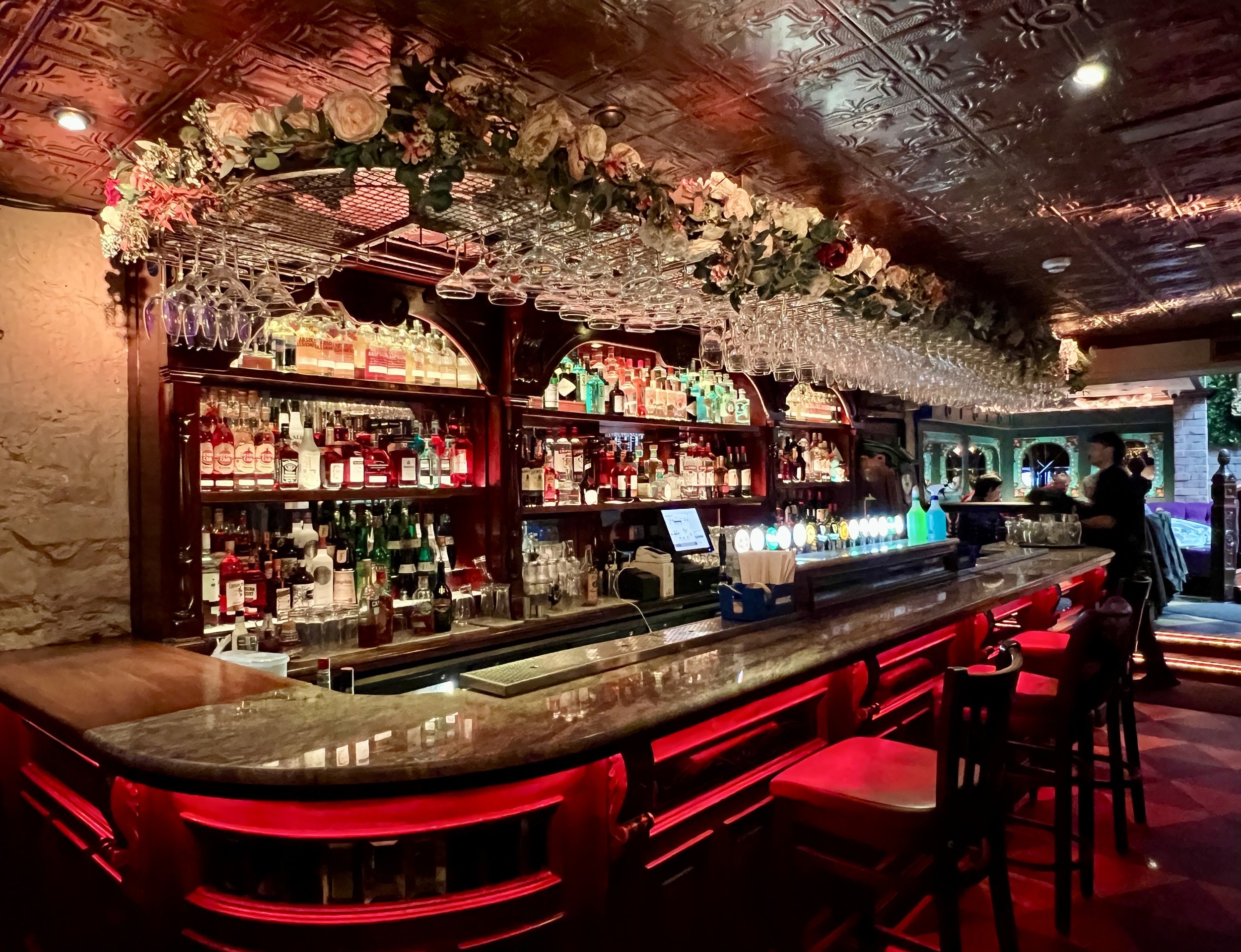
Enjoy Dublin's famous pub scene. Temple Bar is great for photos and vibes, but for cheaper, more traditional pubs, try
The Brazen Head (Ireland's oldest), O'Donoghues Bar, Stag’s Head, or The Cobblestone are known for live Irish music.History of Struggle: Visit Kilmainham Gaol, a former prison that played a major role in Irish independence.
(Note: This is a powerful, emotional visit and often requires booking well in advance.)
🍺 Visit the Guinness Storehouse for a self-guided tour ending with a free pint at the Gravity Bar, with 360-degree city views.
If you like whiskey, choose the tour and tasting at Jameson Distillery Bow St.
Overnight: Dublin ( 2 nights), The best area to stay is near Temple Street.
Driving time: Galway —> Dublin, 3 hours.
DIVERSION: ADD EXTRA DAY: Malahide Castle and Town centre.
Malahide Castle is an 800-year-old medieval fortress that was home to the Talbot family for
nearly eight centuries. Guided tours show rooms like the Oak Room and Great Hall. The castle
stands on 250 acres of parkland with Botanic Gardens and a Walled Garden. Families can visit a
Butterfly House and a Fairy Trail.Malahide is a charming seaside town. After visiting the castle, explore the bustling center with
shops, cafés, and pubs. There’s also a marina and a sandy beach along Dublin Bay.Accessibility: It's very easy to get to from Dublin city centre—just a 25-minute train ride
(DART/Irish Rail) or a quick drive from the airport.
DAY 11
Depart for your journey home.





Average cost:
(EXCLUDING AIRFARE)
$$$ USD for two (2) people
Budget: $3,500
Moderate: $4,000
Luxury: $4,800 +

🌤️ Climate
Ireland’s best weather is from late May to early September, with temperatures around 18 to 20°C. The weather is mild, with both sunny and rainy days, and rainfall between 78 mm and 81 mm.
Western Ireland - receives much higher annual rainfall. More directly exposed to the prevailing Atlantic winds, leading to more frequent and stronger gales. Fewer Sunshine Hours - due to the increased cloud cover and rainfall.
Dublin receives the least rainfall and the most sun relative to the rest of the country.

Ireland Gallery
🎬 Video
No copyright infringement is intended on this website by travelwildnow.comSources: wikipedia.org