1. What type of medication should one take on a trip?
1. Daily Essentials
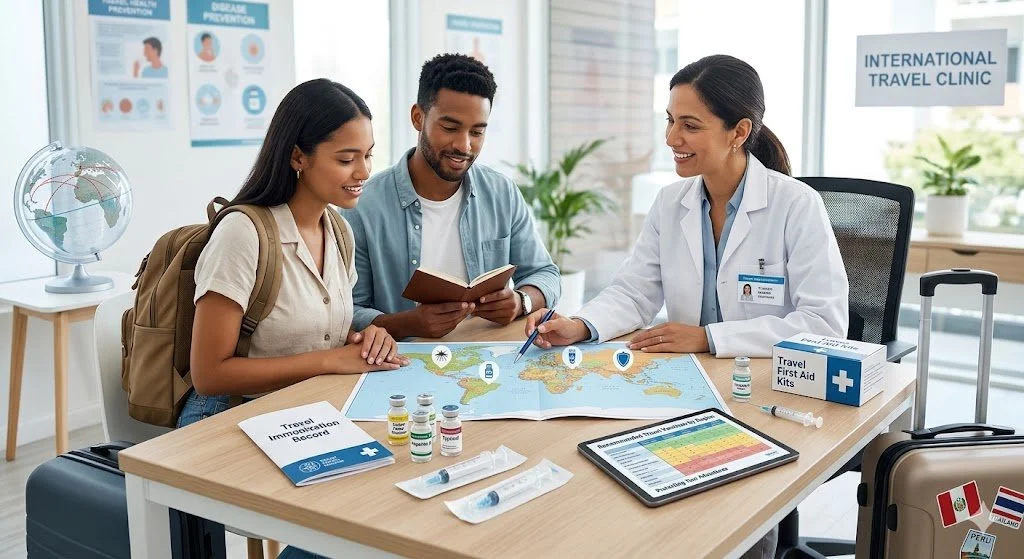
Prescriptions: Pack more than enough for your trip. Keep them in your carry-on bag in their original, labeled bottles to avoid loss or customs delays.
Documentation: Bring a list of your generic medication names and dosages, as brand names vary globally.
2. Core Over-the-Counter (OTC) Pack
Pain & Fever: Acetaminophen or Ibuprofen for headaches, muscle aches, or fevers.
Stomach & Digestion: Pepto-Bismol, Imodium, or Tums for traveler's diarrhea and indigestion.
Motion Sickness: Dramamine or Bonine for flights, winding roads, or boats.
Allergies & Skin: Claritin or Zyrtec for allergies; Hydrocortisone cream for itchy bug bites.
Cold & Cough: Decongestants and throat lozenges for sudden cold symptoms.
3. First Aid & Extras
Wound Care: Band-Aids, blister pads, and antiseptic wipes.
Hydration: Electrolyte powder packets for dehydration or heat exhaustion.
Important: Some common OTC medications (like Sudafed or certain sleep aids) are illegal or restricted in countries like Japan, Greece, and the UAE. Always check your destination's embassy website before packing.
2. What if you have to go to the Emergency Room overseas?
Going to an emergency room in another country can feel incredibly daunting, but having a clear, step-by-step plan makes it manageable. If you find yourself in a medical emergency overseas, here is exactly what to do.
Emergency Checklist
Call Local Emergency Services: Immediate. Dial the local equivalent of 911 immediately. Note that 112 is the universal emergency number across the European Union and many other regions.
Contact Your Travel Insurance: As soon as safe. Call your travel insurance or premium credit card benefit hotline. They provide 24/7 medical assistance, can coordinate with the hospital, approve payment guarantees, and handle language translation.
Gather Essential Documents: Before leaving or en route. Grab your passport, your physical travel insurance card or policy document, and a list of your daily prescription medications (using their generic names).
Notify Your Embassy: For severe emergencies. If you are facing a major medical crisis, hospitalization, or need evacuation, call your home country's local embassy or consulate. They can assist in notifying your family and monitoring your care.
Key Things to Keep in Mind
Payment Up Front: Unlike many home countries, foreign hospitals often require payment before treatment or before discharging you, even in an emergency. Keep a high-limit credit card handy.
Keep Every Single Receipt: Save itemized medical bills, pharmacy receipts, and clinical discharge summaries. You will need every piece of paper to file your insurance claim later.
Public vs. Private: In many destinations, private hospitals offer shorter wait times and higher rates of English-speaking staff than public options, though they are significantly more expensive. Your travel insurance provider can direct you to the best local choice.
.
5. Are there aircraft luggage restrictions when on a Safari?
It’s the first thing you need to check if you are taking any light aircraft flights – and if the answer is YES, check what the luggage allowance is. Airlines can be very strict on baggage limits, so it’s important to double-check your limit before you travel.
If your itinerary states that soft bags are needed, it is because storage space on light aircraft flights is limited and therefore luggage should be soft (e.g. a duffel bag) so they can be squashed into a small hold in the plane.
Your bag should have no spines, frames or a rigid structure, although one flat side is usually allowed. Also bags should have very small wheels or preferably, none at all.
10


12. What about bathroom issues while in the Bush?
Throughout your safari, there are various areas with public bathroom facilities such as visitor centers, camps, lodges and picnic sites.
If you're in the wilderness with no restrooms, go in a natural spot—like behind a tree (after your guide checks it's safe)—or just go behind the vehicle. Leave no trace. This is a standard practice on safari.